

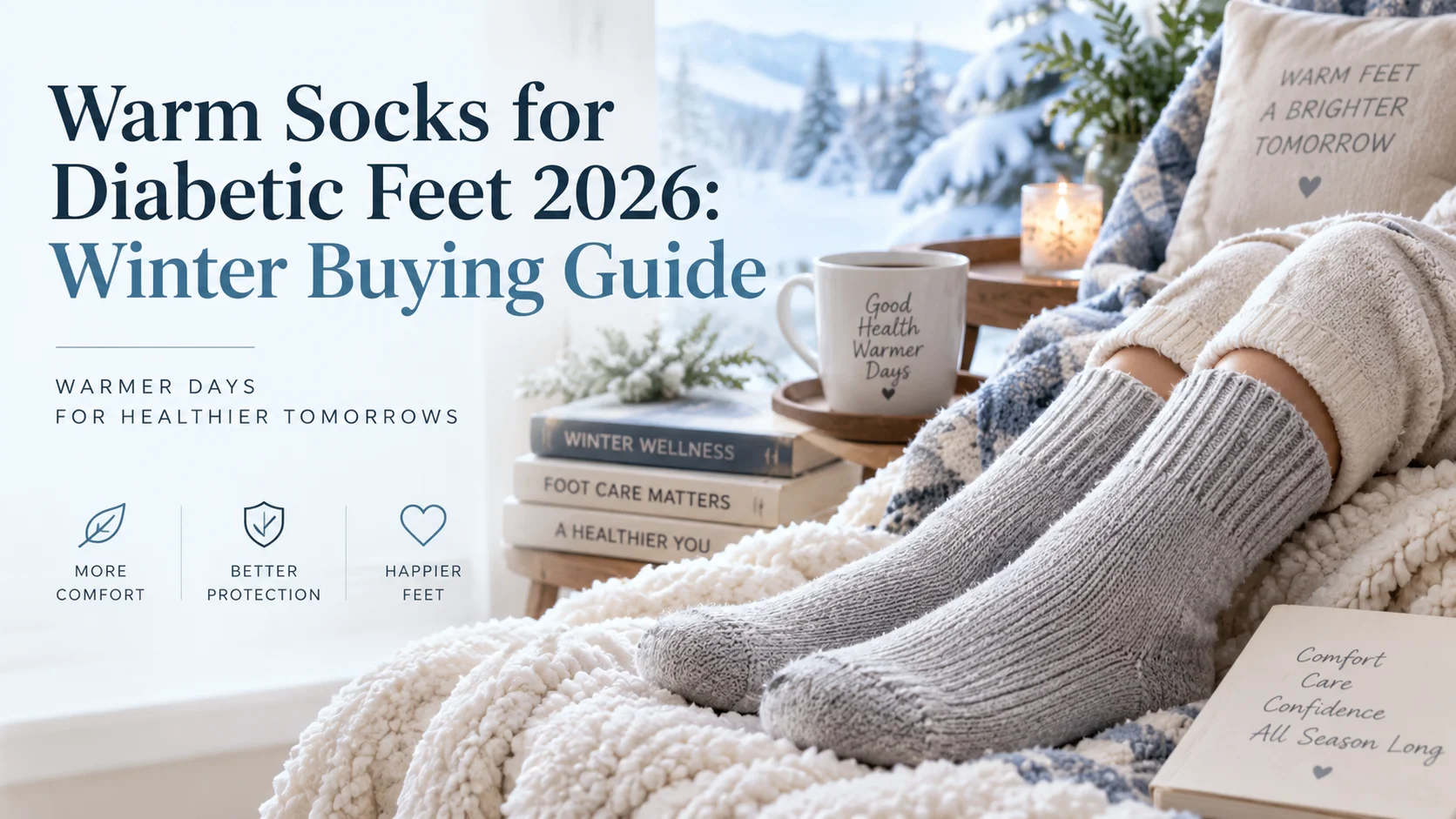
Cold weather can turn an ordinary sock choice into a surprisingly important foot-care decision. If you have diabetes, numbness, sensitive skin, swelling, or feet that often feel cold, you may want more warmth without tight elastic, bulky seams, trapped moisture, or a sock so thick that your shoes become cramped.
The best warm socks for diabetic feet are not simply the thickest pair on the shelf. A better winter sock combines a non-binding cuff, a smooth or seamless toe, moisture management, soft cushioning, and enough room inside footwear. This guide explains how to compare materials, fit, warmth, and safety—especially with neuropathy, wide feet, swelling, or sensitive skin.
Quick Answer: What Are the Best Warm Socks for Diabetic Feet?
For most people looking for diabetes-friendly winter comfort, the best warm diabetic socks have five practical features:
- A non-binding or loose-top cuff that stays up without leaving a deep pressure line.
- A seamless or very flat toe area to reduce rubbing against sensitive toes.
- Moisture-wicking fabric that helps keep dampness away from the skin.
- Light to moderate cushioning under the heel and forefoot without crowding the shoe.
- A warm, breathable blend such as merino wool blended with synthetic fibers, or another soft technical blend designed for insulation and moisture control.
Fit matters as much as fabric. If a warm sock makes a boot tight, it can create pressure and rubbing. People with reduced sensation may not notice that early, so daily skin checks and well-fitting footwear remain important.
Why Can Feet Feel Cold With Diabetes?
Cold feet are not specific to one condition. Environment, footwear, activity, circulation, nerve function, and other health factors can all influence foot temperature or sensation.
Diabetic peripheral neuropathy can cause numbness, tingling, pain, or altered awareness of heat and cold. Diabetes can also be associated with reduced blood flow to the feet, which may affect healing.
That means “my feet feel cold” does not automatically mean poor circulation, and a warm sock cannot diagnose or correct the cause. If coldness is new, persistent, one-sided, or accompanied by pain, skin-color changes, sores, or a noticeable temperature change, it deserves medical attention rather than simply adding thicker socks. CDC specifically lists changes in foot color or temperature, loss of sensation, pain, sores, and ulcers among reasons to contact a healthcare professional.
What Makes a Good Winter Diabetic Sock Different?

A standard thermal sock is designed mainly to retain heat. A diabetes-friendly winter sock has to do more: protect skin, avoid unnecessary pressure, manage moisture, and still fit comfortably inside the shoe.
1. A Non-Binding Cuff
A warm diabetic sock should stay in place without a tight elastic band digging into the ankle or calf. Look for terms such as non-binding cuff, gentle cuff, loose top, stretchable top, or non-restrictive cuff.
A loose top should not mean a slipping sock: bunching can also create friction. The cuff should lie flat without leaving a pronounced groove. NIDDK advises against tight socks or elastic stockings.
2. A Seamless or Low-Profile Toe
For sensitive feet or diabetic neuropathy, a seamless toe, flat toe seam, or smooth interior can reduce a common source of rubbing. NIDDK recommends well-fitting, lightly padded socks and notes that no-seam socks are best.
3. Moisture Management
Warm does not mean sweaty. Damp socks can increase friction during long days in insulated footwear. Look for moisture-wicking fibers, breathable construction, and blends that dry reasonably well; change socks if they become wet.
4. Cushioning Without Excessive Bulk
Padding under the heel and forefoot can improve comfort, but more is not automatically better. If thick diabetic socks reduce toe room or make the shoe press on the foot, choose a thinner warm sock or roomier footwear.
5. The Correct Size and Shape
Socks should not pinch or wrinkle. Check foot size and, for crew or knee-high styles, calf circumference. Wide or extra-wide sizing is often better than simply sizing up, which can leave excess fabric at the heel or toe.
Best Materials for Warm Diabetic Socks

The best material depends on warmth, skin sensitivity, moisture, footwear, and care preferences.
| Material | Winter strengths | Possible limitations | Often suits |
|---|---|---|---|
| Merino wool or wool blend | Warm for its weight, breathable, comfortable across changing temperatures | Can cost more; care instructions vary | Cold weather, winter boots, people who want warmth without extreme bulk |
| Synthetic blend (polyester/nylon/acrylic with elastane) | Good moisture transport, quick drying, durable, easy to shape | Feel varies by knit; some heavy thermal versions can trap heat | Active wear, damp climates, everyday winter use |
| Cotton blend | Soft, familiar feel, widely available | Cotton can absorb moisture and may dry more slowly than technical fibers | Light winter use when feet stay dry |
| Bamboo-derived rayon blend | Soft hand-feel and comfortable against sensitive skin | Performance depends heavily on the complete blend and knit; “bamboo” alone does not guarantee better moisture control | Sensitive feet, people prioritizing softness |
Is Merino Wool Good for Diabetic Feet?
Merino wool can be a strong winter option when the sock is non-binding, smooth, correctly sized, and not too thick for the shoe. It does not treat diabetes or circulation; its value is practical insulation without extreme bulk. Choose fine, soft fibers rather than coarse wool.
Are Cotton Diabetic Socks Good in Winter?
Cotton is not automatically “bad,” but 100% cotton can be less practical when feet sweat because it absorbs moisture and may dry slowly. A cotton blend can still be comfortable indoors or when feet stay dry; wool or technical blends are often more practical for wet or active winter use.
What About Bamboo Diabetic Socks?
“Bamboo socks” are usually rayon or viscose derived from bamboo and can feel very soft. Judge the whole construction—cuff, seam, fit, thickness, and blend—rather than assuming the bamboo label makes a sock medically superior.
Thick, Thermal, Cushioned or Padded: How Warm Should the Sock Be?
The warmest diabetic socks are not necessarily the safest or most comfortable. Thick socks may suit roomy winter boots; medium-weight merino or thermal socks often work better in regular shoes; light cushioning may be enough indoors.
Use this rule: warmth must not come at the cost of shoe fit.
After putting on winter diabetic socks, check whether:
- your toes still have room to move;
- the shoe or boot closes normally;
- there is no new pressure over the toes, sides, heel, or top of the foot;
- the sock does not wrinkle under the foot;
- the cuff does not leave a deep indentation.
If a thicker sock changes the shoe from comfortable to tight, choose a thinner warm sock or roomier footwear rather than forcing the combination.
Best Warm Diabetic Socks by Need

For Diabetic Neuropathy or Reduced Sensation
For diabetic neuropathy, prioritize smooth construction, a seamless toe, predictable fit, gentle cushioning, and no tight cuff. Reduced sensation can make rubbing, pressure, or excess heat harder to notice.
Check feet after trying a new sock-and-shoe combination.
| Product | Warmth / Material | Key Features to Compare | Best For | Amazon CTA |
|---|---|---|---|---|
| FACOOL Merino Wool Non-Binding Diabetic Socks | Merino wool blend | Non-binding top, seamless toe, cushioned sole, winter-friendly warmth | Cold weather, sensitive feet, roomy winter footwear | Check Price on Amazon |
| Wigwam Diabetic Thermal Socks | Acrylic + wool blend | Thermal insulation, non-binding construction, full cushioning | Winter boots and colder climates | Check Price on Amazon |
| Loose Fit Stays Up Merino Wool Socks | Merino wool blend | Loose-fit top, cushioning, reinforced heel and toe | People wanting warmth without a tight cuff | Check Price on Amazon |
| Forcool Merino Wool Non-Binding Crew Socks | Merino wool + acrylic blend | Extra-wide soft cuff, seamless toe, moisture-wicking design | Wide calves, sensitive feet, cold-weather wear | Check Price on Amazon |
| DeoMed Merino Wool Diabetic Socks | 36% merino wool blend | Non-compressive fit, seamless construction, warmth and moisture regulation | Winter comfort and gentle fit | Check Price Availability |
For Sensitive Feet
For sensitive feet, prioritize a soft, flat interior over maximum thickness. Turn the sock inside out and inspect the toe, heel join, loose threads, and raised areas that may contact skin.
For Seniors and Elderly Adults
For seniors, an easy-to-pull-on sock with a stretchy non-binding cuff and clear sizing can be helpful. If vision, reach, hand strength, or balance makes foot care difficult, NIDDK recommends using a mirror or asking someone else to help inspect the feet.
For Wide Feet, Wide Calves, or Swelling
For wide feet or calves, look for extra-wide warm diabetic socks or styles that publish calf measurements. If swelling is new, significant, one-sided, or unexplained, do not simply move to larger socks; it may need medical evaluation.
For Men and Women
Warm diabetic socks for men and women use the same core criteria: a gentle cuff, smooth interior, moisture control, and correct fit. Gender labels mainly change sizing and styling, so use the brand’s actual size chart rather than assuming a “men’s” or “women’s” winter sock will fit correctly.
Crew, Ankle, or Knee-High?
Crew socks are versatile for winter. Knee-high diabetic socks offer more coverage but require careful calf sizing so the top does not bind or roll.
Ankle socks may work indoors or in mild weather but provide less coverage. With boots, choose a height that prevents the boot collar from rubbing bare skin.
Diabetic Socks vs. Thermal Socks vs. Compression Socks

These categories are not interchangeable. A diabetic sock emphasizes a non-binding top, smooth interior, cushioning, moisture management, and low friction. A thermal sock primarily emphasizes insulation, and some are too tight or bulky for sensitive feet. A compression sock deliberately applies pressure to the leg.
Warm socks do not reliably “improve circulation” just because feet feel warmer, and diabetes is not by itself a reason to self-select compression. If you have peripheral artery disease (PAD), significant circulation problems, a history of ulcers, or a medical compression recommendation, ask your healthcare professional what type of sock or compression is appropriate.
How to Keep Diabetic Feet Warm Safely
With reduced sensation, direct heat can cause burns before a person recognizes excessive temperature. The American Diabetes Association and NIDDK advise using warm socks rather than hot water bottles or heating pads and keeping feet away from heaters or open fires.
Practical winter steps include:
- Start with dry feet and dry socks. Replace damp socks rather than trying to “warm through” moisture.
- Use lined, waterproof winter footwear outdoors. NIDDK specifically recommends lined, waterproof boots in winter to keep feet warm and dry. In severe cold, reduced sensation can also make cold injury harder to recognize, so keep footwear dry and avoid prolonged exposure.
- Keep shoes roomy enough for the sock. Insulation works poorly when the foot is compressed.
- Inspect feet every day. Look for redness, blisters, cracks, swelling, sores, color changes, or areas that feel unusually warm or cold.
- Avoid direct high heat on numb feet. Heating pads, hot water bottles, radiators, fireplaces, and very hot water can cause burns that may go unnoticed.
- Be cautious with heated or electric socks. If you have neuropathy, reduced temperature sensation, PAD, or a history of foot wounds, electrically heated footwear may create a burn risk. Ask your clinician before using it rather than relying on heat sensation alone.
NIDDK also notes that wearing socks in bed is an option when feet get cold.
Common Buying Mistakes to Avoid
Avoid these common errors:
- choosing the thickest sock even when it tightens the shoe;
- assuming “thermal” means non-binding or seamless;
- sizing up instead of choosing a true wide-foot or wide-calf style;
- continuing to wear damp socks;
- assuming diabetic socks treat poor arterial circulation;
- using compression simply because feet feel cold;
- skipping daily skin checks because the sock feels comfortable.
A Practical Buying Checklist
Before buying warm diabetic socks for cold weather, check the product description and sizing chart for:
- non-binding, stretchable cuff;
- seamless toe or very flat toe seam;
- soft interior without rough ridges;
- moisture-wicking or quick-drying construction;
- enough insulation for your climate without excessive bulk;
- light or moderate cushioning where wanted;
- foot-size and calf-size options that match your measurements;
- extra-wide sizing if needed;
- a height that works with your footwear;
- care instructions you can follow consistently.
Test the socks with the shoes or winter boots you actually plan to wear. A good sock can become a poor choice inside footwear that is too short, narrow, or shallow.
When Cold Feet Need More Than Warmer Socks
Contact a healthcare professional or podiatrist if you notice a new or persistent change in foot temperature, color change, pain, numbness, tingling, burning, swelling, a blister, a cut, a sore, drainage, or an area that is not healing.
Diabetes-related nerve damage can make injuries less noticeable, while reduced blood flow can make some wounds harder to heal. Early attention to foot problems matters.
If you already have an ulcer, active wound, significant PAD, marked loss of sensation, or a history of serious diabetic foot problems, sock selection should be part of a broader foot-care plan rather than a stand-alone purchase decision.
Frequently Asked Questions
What Socks Are Best for Diabetic Cold Feet?
Choose warm, non-binding socks with a smooth or seamless toe, moisture-managing fabric, gentle cushioning, and enough room inside your footwear. For colder climates, a soft merino-wool blend or technical thermal blend can provide warmth without requiring excessive thickness.
What Are the Warmest Diabetic Socks?
Heavy thermal or wool-blend diabetic socks can be very warm, but maximum insulation is not always the best choice. The best winter sock is warm enough for the conditions while still allowing comfortable shoe fit, toe room, breathability, and moisture control.
Are Wool Socks Good for Diabetics?
They can be. Soft merino wool or a wool blend can be useful in cold weather if the sock is non-binding, smooth inside, correctly sized, and comfortable against the skin. Avoid coarse wool, tight cuffs, or bulky designs that make shoes cramped.
Should Diabetic Socks Be Thick or Thin?
Neither is universally better. Thin-to-medium socks work well in close-fitting everyday shoes; thicker socks can suit roomy winter boots. Choose the thickness that keeps feet comfortable without creating pressure or reducing toe space.
Do Diabetic Socks Help Cold Feet?
Warm diabetic socks can help conserve heat and improve comfort, but they do not treat the underlying cause of persistent cold feet. If coldness is new or associated with numbness, pain, color change, sores, or other symptoms, seek medical evaluation.
Do Warm Socks Improve Circulation?
Warm socks can reduce heat loss, but warmth should not be confused with improved arterial circulation. Socks are not a treatment for peripheral artery disease or another blood-flow disorder.
Can Diabetics Use Heated Socks?
People with normal sensation may encounter different risks than people with neuropathy. If you have reduced ability to feel heat or cold, PAD, or a history of foot wounds, heated socks can expose the skin to excessive heat without an early warning sensation. Ask your healthcare professional before using electrically heated socks.
Can Diabetics Sleep in Warm Socks?
Warm, clean, non-binding socks may be worn in bed if feet get cold; NIDDK specifically suggests socks in bed as a way to protect cold feet. Make sure the cuff is not tight and inspect the skin regularly.
How Tight Should Diabetic Socks Be?
They should be secure enough not to slide or wrinkle but should not dig into the skin or leave a pronounced pressure groove. If a sock rolls, pinches, causes discomfort, or visibly constricts the ankle or calf, recheck the size and style.
Why Should Diabetic Socks Be Non-Binding?
A non-binding top is designed to reduce concentrated pressure from elastic at the ankle or calf. It should still hold the sock in position; overly loose socks that fall and bunch can create their own friction problem.
Final Takeaway
The best warm socks for diabetic feet balance insulation with protection: a non-binding cuff, smooth toe, moisture management, cushioning, correct sizing, and enough shoe room. Merino-wool and well-designed synthetic blends are practical winter choices, while cotton or bamboo-derived blends may also work when the complete construction suits the wearer.
Persistent cold feet are a symptom to understand, not simply a reason to keep adding heat. If diabetes has affected sensation, circulation, skin integrity, or wound healing, daily foot inspection and professional guidance matter more than any sock label.
Medical Information Notice: This article provides general educational and product-selection information and is not a substitute for individualized medical advice. If you have loss of sensation, peripheral artery disease, significant swelling, a foot wound or ulcer, major color or temperature changes, or another circulation or foot-health concern, ask a qualified healthcare professional or podiatrist what sock, footwear, or compression approach is appropriate for you.
Sources & Medical References
- National Institute of Diabetes and Digestive and Kidney Diseases (NIDDK): Diabetes & Foot Problems — guidance on diabetic neuropathy, daily foot inspection, sock and shoe fit, avoiding tight socks, cold-weather protection, and avoiding heating pads or hot water bottles on the feet.
- Centers for Disease Control and Prevention (CDC): Your Feet and Diabetes — guidance on neuropathy, reduced ability to sense pain, heat and cold, daily foot checks, and warning signs that warrant medical attention.
- NIDDK: Peripheral Neuropathy — information on diabetes-related nerve damage, reduced sensation, foot injuries, sores, and preventive foot care.
- American Diabetes Association: Foot Complications and diabetes foot-care guidance — information on neuropathy, poor circulation, cold feet, and using warm socks instead of direct heat when sensation is impaired.

1 thought on “Warm Socks for Diabetic Feet 2026: Winter Buying Guide”