

Choosing socks can seem simple until diabetes, numbness, swelling or sensitive skin makes small details matter. A raised toe seam can rub. A tight cuff can leave a deep mark. A thick sock can make an otherwise comfortable shoe too snug.
So, what are the best diabetic socks For most people seeking diabetes-friendly foot protection, the best pair fits correctly, has a smooth or seamless toe, uses a gentle non-binding cuff, manages moisture, and provides enough cushioning without crowding the shoe. The best material or thickness depends on your feet, footwear, activity level, climate and whether you have neuropathy or swelling.
This guide explains how to compare diabetic socks for everyday wear, sensitive feet, neuropathy, swollen feet, wide calves, work, walking, summer and winter—without treating socks as a substitute for medical care.
Quick Answer: What Are the Best Socks for Diabetics?
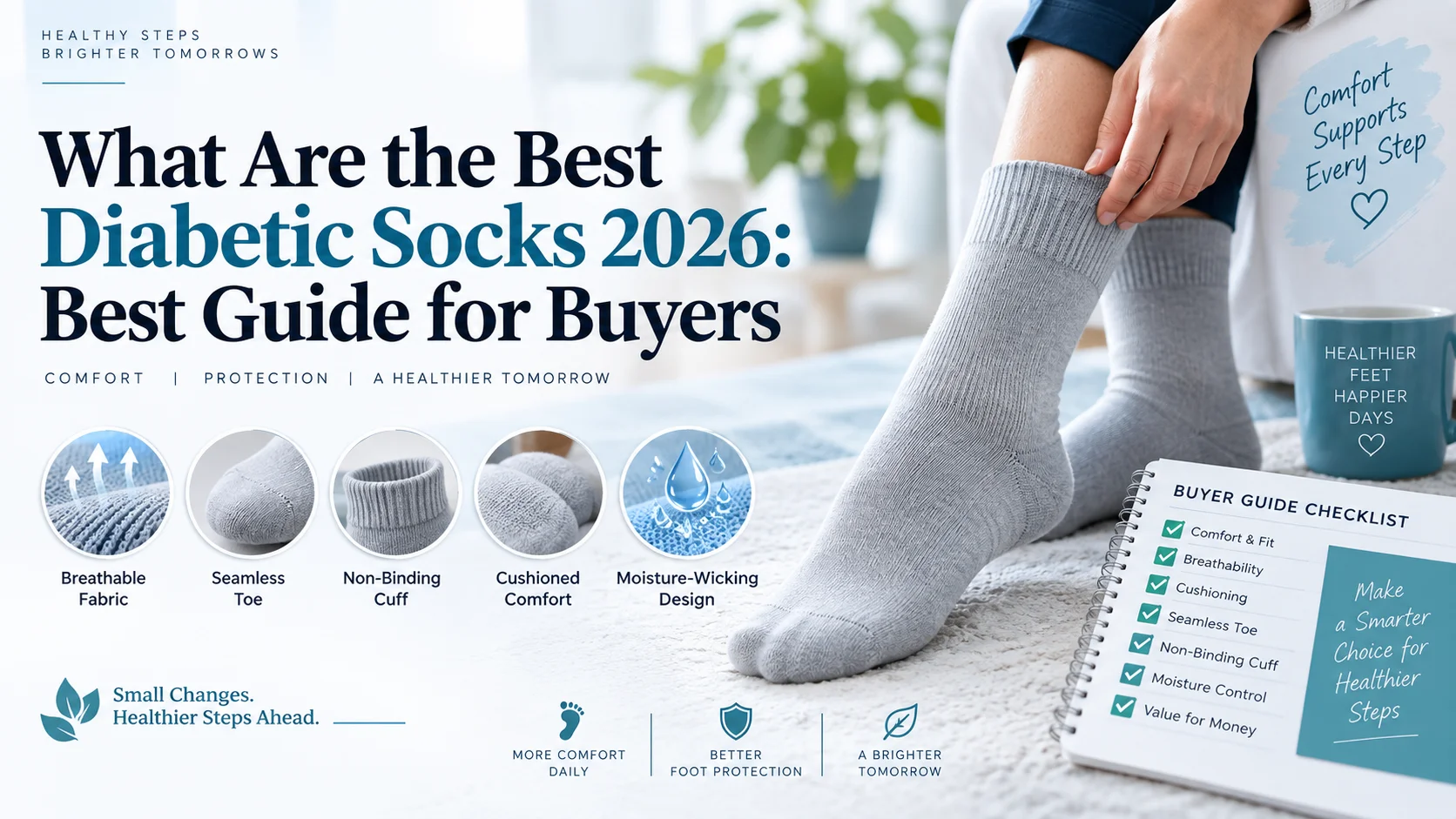
A good diabetic sock should protect the skin without creating new pressure or friction. Look for:
- A non-binding cuff that stays up without digging into the leg
- A seamless toe or very flat toe seam
- A smooth interior without rough stitching or bulky labels
- Moisture-wicking, breathable fabric
- Light or moderate cushioning that does not make shoes tight
- Correct sizing for both the foot and, for taller socks, the calf
- Enough stretch for swelling or wider feet without bunching
- A clean, dry pair each day
Light-colored socks can also make blood or drainage easier to notice. The American Diabetes Association recommends socks that fit well, are not too tight, manage moisture, minimize seams and provide cushioning when needed.
No sock can guarantee prevention of ulcers, infection or other diabetic foot complications. Daily foot checks, properly fitting shoes and timely medical care remain essential.
Why Diabetic Sock Features Matter
Diabetes can affect the feet in more than one way. Diabetic neuropathy may reduce sensation, making a person less aware of heat, rubbing, blisters or small injuries. Diabetes can also be associated with reduced blood flow in the feet. When sensation is impaired, a problem that would normally hurt may go unnoticed.
The practical goal of diabetic socks is therefore simple: reduce avoidable rubbing, pressure, moisture buildup and constriction while keeping the feet covered.
Not every person with diabetes needs a product specifically labeled “diabetic.” A well-fitting regular sock with appropriate construction may suit some people. Others—especially those with neuropathy, sensitive skin, recurrent irritation, swelling or changes in foot shape—may benefit from purpose-designed features. The label matters less than the actual fit and construction.
The Features That Matter Most

1. A Non-Binding Cuff
The best non-binding diabetic socks use a cuff that is wide and stretchy enough to hold the sock in place without creating a tight ring around the ankle or calf. NIDDK specifically advises people with diabetes not to wear tight socks or elastic stockings as routine foot-care guidance.
“Non-binding” does not mean loose enough to fall down. A sock that slides, twists or bunches can create friction and pressure points.
After wearing a new pair, inspect the skin. Deep grooves, persistent redness, discomfort, numbness, color change or increased swelling can indicate a poor fit. People with reduced sensation should rely on visual inspection, not comfort alone.
2. A Seamless or Smooth Toe
A bulky toe seam may rub against the toes, especially in shoes with limited space. Seamless socks, hand-linked toes or very flat seams can remove one common source of irritation. NIDDK recommends well-fitting, lightly padded socks and notes that socks without seams are best.
This can be particularly useful for sensitive feet, hammertoes, bunions or neuropathy. But a seamless sock that is too short can still pull tightly across the toes, while one that is too large can wrinkle.
3. Moisture Management and Breathability
Feet are generally more comfortable when the sock helps move perspiration away and dries reasonably well. The ADA advises synthetic fabric or wool for moisture wicking, while Mayo Clinic also advises clean, dry socks and mentions cotton or moisture-wicking fibers.
Synthetic fibers such as polyester and nylon are commonly used for durability and moisture handling. Fine merino wool can manage moisture and temperature well. Cotton feels soft and familiar but may hold moisture longer, so a cotton blend can be more practical for people whose feet sweat heavily.
Bamboo-derived rayon can feel smooth and soft, but “bamboo” alone does not prove medical superiority. Judge the finished sock by fit, seams, moisture handling, cushioning and comfort.
4. Cushioning Without Excess Bulk
Light cushioning under the heel and forefoot can improve comfort and reduce direct rubbing. More padding is not automatically better.
A heavily padded sock takes up more room inside the shoe. If that crowds the toes or tightens the shoe across the foot, the extra cushioning can create unwanted pressure.
Think of the sock and shoe as one system. Whenever you switch to thicker socks, re-check toe room and overall shoe fit.
5. A Smooth Interior
Turn a new sock inside out before wearing it. Check for rough stitching, loose threads, bulky labels or irregular areas.
This simple inspection matters more when sensation is reduced. Even a soft sock can cause trouble if it wrinkles inside the shoe or traps a small object against the skin.
Best Diabetic Socks by Need

| Need | Features to Prioritize | What to Watch For |
|---|---|---|
| Everyday wear | Non-binding cuff, smooth toe, breathable fabric, light cushioning | Bunching or tight shoes |
| Neuropathy | Seamless interior, correct fit, cushioning, easy inspection | Pressure points you may not feel |
| Sensitive feet | Soft interior, flat seams, gentle cuff | Rough yarns or tight elastic |
| Swollen feet | Extra stretch, wide opening, generous volume | Assuming swelling is harmless |
| Wide feet | Wider shape, roomy toe area, stretch | Oversizing until the heel slips |
| Wide calves | Calf-specific sizing, broad cuff | Rolling or digging at the calf |
| Walking | Moisture management, heel/forefoot cushion, secure fit | Excess thickness |
| Work | Durable wicking fabric, cushioning, stay-up fit | Heat and shoe crowding |
| Summer | Lighter breathable knit | Thin fabric that wrinkles |
| Winter | Merino or warm blend, smooth interior | Thick socks making boots tight |
| Product | Useful Features to Compare | Best Suited For | Material / Style | Check on Amazon |
|---|---|---|---|---|
| Orthofeet Padded Sole Diabetic Socks | Seam-free interior, non-constricting design, moisture-wicking system, padded sole | Readers wanting more cushioning and a smooth interior | Unisex padded diabetic sock | Check Price |
| Orthofeet Extra Roomy Diabetic Socks | Extra-roomy construction, gentle fit, thicker design | Wider feet/calves or readers who need extra room | Thick unisex diabetic sock | Check Price |
| Pembrook Low-Cut Seamless Diabetic Socks | Low-cut design, seamless construction, non-binding style | Everyday wear and lower-profile shoes | Low-cut diabetic sock | Check Price |
| Pembrook Bamboo Diabetic Socks | Soft bamboo-viscose style, non-binding construction | Readers prioritizing softness and light everyday comfort | Bamboo-blend styles | Check Price |
| Hugh Ugoli Bamboo Diabetic Ankle Socks | Seamless toe, non-binding top, lightweight bamboo-derived rayon blend | Lightweight ankle wear and warm-weather use | 80% rayon from bamboo blend | Check Price |
| Yomandamor Bamboo Diabetic Ankle Socks | Seamless toe, non-binding top, wider top design | Readers looking for a loose ankle-style fit | Bamboo-style ankle sock | Check Price |
| Dr. Scholl’s Diabetes & Circulatory Socks | Widely available diabetic/circulatory-style sock, everyday design | General daily wear | Crew-style options | Check Price |
The best diabetic socks for men and women are chosen mainly by measurements and foot needs, not gender labels. For seniors, ease of putting socks on may also matter if hand strength, mobility or balance is limited.
Best Diabetic Socks for Neuropathy and Sensitive Feet
For diabetic neuropathy, prioritize protection from irritation that may not be felt normally: a smooth toe, minimal internal texture, moisture management, secure sizing and suitable cushioning.
Diabetic socks do not treat nerve damage, restore sensation or cure numbness and tingling. Their role is protective and comfort-focused. Mayo Clinic recommends daily foot care for peripheral neuropathy and advises soft socks and padded shoes; NIDDK similarly emphasizes daily inspection because injuries may occur without noticeable pain.
If sensation is reduced, check your feet before putting socks on and after removing them. Look for redness, blisters, cuts, cracks, drainage, swelling or unusual pressure marks. Light-colored socks can help reveal drainage, but they do not replace a direct skin check.
Best Diabetic Socks for Swollen Feet, Wide Feet and Wide Calves
Swelling changes the fit problem. A sock may feel comfortable in the morning but become restrictive later. If swelling has already been medically evaluated and your clinician has not advised otherwise, look for extra-wide diabetic socks with a highly stretchable leg and a cuff designed to accommodate changes in circumference.
For crew or knee-high socks, calf circumference matters. Do not simply buy a much larger shoe-size sock to gain calf width. That can place the heel incorrectly and leave extra fabric around the foot.
Use the manufacturer’s size chart. Depending on the sock, useful measurements may include shoe size, ankle circumference and calf circumference.
New, one-sided, severe or unexplained swelling should not be managed simply by buying looser socks. It deserves medical assessment.
Cotton, Bamboo, Wool or Synthetic: Which Material Is Best?

There is no single best material for every diabetic foot.
Cotton or cotton blends: Soft and familiar. Cotton-heavy socks may stay damp longer, so blends can be more practical for sweaty feet or long workdays.
Bamboo-derived rayon: Often smooth and soft. It may feel comfortable on sensitive skin, but the fiber name alone is not proof of better diabetic-foot protection.
Merino wool: Useful for moisture and temperature management. Fine merino can work well for winter, walking or people who dislike clammy feet.
Polyester and nylon: Common in performance socks because they can wick moisture, add durability and help the sock keep its shape.
Spandex or elastane: Usually present in small amounts for stretch and shape retention. Elastic fiber is not automatically a problem; what matters is whether the finished sock constricts the foot or leg.
A 2026 systematic review found that clinical studies of diabetic socks were limited and generally low quality, while some specialty-fiber claims in commercial products lacked clinical support. That makes construction, fit and realistic comfort features more useful buying criteria than marketing claims about special yarns or finishes.
How Should Diabetic Socks Fit?
A diabetic sock should feel secure rather than compressive.
The heel should sit at the heel. The toes should lie naturally without being squeezed. Fabric should not wrinkle beneath the foot, and the cuff should not roll into a narrow band.
For ankle socks, shoe size may be enough to start. For crew or knee-high socks, calf circumference becomes increasingly important, particularly for wide calves or swelling.
Always try the socks with the shoes you actually plan to wear.
Signs a Sock May Be Too Tight
Watch for:
- A deep cuff groove that persists after removal
- Ongoing redness or irritation
- New numbness, tingling or pain
- Crowded toes
- Skin color changes
- Worsening swelling around the cuff
If you have neuropathy, do not rely on discomfort alone to identify a fit problem.
Diabetic Socks vs. Compression Socks
Diabetic socks and compression socks are not the same thing.
Typical non-binding diabetic socks are intended mainly to minimize friction, pressure and constriction. Graduated compression socks intentionally apply the greatest pressure near the ankle and less higher on the leg. Compression strength is commonly expressed in millimeters of mercury, or mmHg.
Compression can be useful for some venous or swelling-related conditions, but it is not automatically appropriate for everyone with diabetes. Cleveland Clinic advises professional guidance for compression when a person has peripheral artery disease (PAD) or severely reduced sensation, and also flags open wounds and severe swelling as important safety considerations. An international consensus statement likewise identifies important contraindications and risk considerations for medical compression.
Do not choose 15–20 mmHg, 20–30 mmHg or another compression level simply because a product is labeled for diabetes. If you have PAD, significant neuropathy, wounds, major circulation problems or unexplained swelling, ask a qualified healthcare professional whether compression is appropriate.
Non-binding diabetic socks also should not be advertised as “improving circulation.” Avoiding unnecessary constriction is different from treating a circulation disorder.
Best Diabetic Socks for Walking, Work, Summer and Winter
For walking, prioritize stable fit, moisture handling and heel/forefoot cushioning. The sock should not slide inside the shoe.
For work or long periods of standing, durability and sweat management matter. Medium cushioning may help comfort, but not if it crowds work shoes or boots.
For summer, choose a lighter breathable knit with good moisture management. Thin fabric still needs to fit securely enough not to wrinkle.
For winter, fine merino wool or warm synthetic blends can insulate without extreme bulk. Check boot fit carefully, especially if sensation is reduced.
Do All People With Diabetes Need Special Socks?
No. Diabetes does not mean every person must wear socks marketed as diabetic.
Need depends on sensation, circulation, skin condition, swelling, foot shape, footwear, previous sores and professional advice. Someone with intact sensation and no foot problems may simply need clean, comfortable, properly fitting socks. Someone with neuropathy or previous skin injury may have more reason to prioritize seamless construction, cushioning and careful fit.
A healthcare professional or podiatrist can assess sensation, circulation, deformity and pressure areas if you are unsure which features matter most.
What Socks Should People With Diabetes Avoid?
Avoid socks that create predictable fit or skin problems, including those that:
- Have tight, narrow elastic bands
- Put bulky seams against the toes
- Wrinkle or bunch under the foot
- Stretch tightly across the toes
- Are so large that they fold inside the shoe
- Stay damp for long periods
- Make footwear too tight because of excess thickness
- Have rough internal stitching, holes or damaged areas
NIDDK also advises against using rubber bands to hold loose socks up.
Replace socks when holes, thinning, rough repairs, stretched cuffs or loss of shape prevents a smooth fit. There is no universal replacement schedule; condition matters more than an arbitrary number of months.
How to Choose the Best Diabetic Socks: 7-Step Buying Checklist
- Identify your main need. Everyday comfort, neuropathy, swelling, wide calves, walking and cold-weather use can require different designs.
- Check the toe construction. Prefer seamless, hand-linked or very flat seams when rubbing is a concern.
- Inspect the cuff. Look for a broad, gentle, non-binding top rather than a narrow elastic band.
- Match cushioning to your footwear. Padding helps only if the shoe remains roomy enough.
- Choose fabric for your environment. Moisture-wicking synthetics and wool can be useful for sweat management; soft blends may suit sensitive feet.
- Use the actual size chart. For taller socks, check calf measurements instead of relying solely on shoe size.
- Inspect after the first few wears. Look for marks, redness, rubbing, dampness or bunching.
When reading diabetic sock reviews, give more weight to objective details—size range, seam type, fiber content, cushioning location and cuff construction—than to vague claims such as “boosts circulation” or “medical grade.”
Daily Foot Care Matters More Than the Sock Label
Even the best diabetic socks are only one part of foot care.
NIDDK recommends checking the feet every day, wearing shoes and socks rather than going barefoot, inspecting shoes for objects or rough areas, and using well-fitting footwear. Keep socks clean and dry, and change them sooner if they become wet.
Seek medical care promptly for a sore, blister, cut, infection, unusual color change or wound that is not improving. If you cannot easily see the soles of your feet, use a mirror or ask for help.
Frequently Asked Questions
Are diabetic socks worth it?
They can be worthwhile when their design solves a real problem, such as tight cuffs, toe-seam irritation, moisture buildup, swelling accommodation or reduced sensation. The “diabetic” label alone does not make a sock better.
Do diabetic socks help neuropathy?
They do not treat nerve damage. A smooth, non-binding, cushioned sock may help reduce avoidable friction and pressure on a foot with reduced sensation.
Do diabetic socks help swollen feet?
Extra-wide, non-binding socks can accommodate some swelling more comfortably, but they do not treat its cause. New, severe, one-sided or unexplained swelling needs medical evaluation.
Can people with diabetes wear compression socks?
Some can, but the decision depends on circulation, sensation, the cause of swelling, skin condition and other health factors. People with PAD, significant neuropathy, wounds or major swelling should seek professional guidance before using compression.
Are seamless socks better for diabetics?
A seamless or very flat toe removes one potential source of rubbing and is especially useful for sensitive feet or neuropathy. Correct overall sizing is still essential.
Are cotton socks good for diabetics?
They can be comfortable. If your feet sweat heavily, a moisture-wicking blend, wool or synthetic fabric may keep the feet drier than a thick cotton-heavy sock.
Are bamboo socks good for diabetic feet?
Bamboo-derived rayon can feel soft and smooth, but the material name alone does not establish medical superiority. Fit, seam construction, moisture handling and cuff pressure matter more.
Can you wear diabetic socks all day?
A correctly fitting pair can generally be worn through normal daytime activities, but change socks if they become damp, dirty, wrinkled or uncomfortable. Individual medical needs may alter this advice.
How often should diabetic socks be changed?
Use a clean, dry pair each day and change sooner if it becomes wet or soiled. Replace worn socks when cushioning, shape, seams or cuffs no longer provide a smooth fit.
Where can you buy diabetic socks?
They are commonly available from pharmacies, medical-supply stores, footwear retailers, brand websites and major online retailers. Compare construction and the size chart instead of buying solely by the “diabetic” label.
Final Takeaway: What Are the Best Diabetic Socks?
The best diabetic socks are not defined by one brand, one fiber or the thickest padding. They fit the feet and calves correctly, stay smooth inside the shoe, avoid restrictive cuffs, manage moisture and provide useful cushioning without creating pressure.
For everyday wear, start with a non-binding cuff, seamless or very flat toe, breathable moisture-wicking fabric and accurate sizing. If you have neuropathy, significant swelling, PAD, wounds or major changes in foot sensation or color, sock selection should be part of a broader foot-care conversation with a qualified healthcare professional.
Medical information notice: This article provides general educational and product-selection information, not a diagnosis or individualized medical advice. If you have loss of sensation, a foot wound, infection, significant circulation disease, severe or unexplained swelling, or questions about compression, seek guidance from a qualified healthcare professional.
Sources & Medical References
- National Institute of Diabetes and Digestive and Kidney Diseases (NIDDK), Diabetes & Foot Problems.
- American Diabetes Association, 8 Tips to Protect Your Feet with Diabetes.
- American Diabetes Association, Diabetes & Your Feet.
- Mayo Clinic, Diabetic Neuropathy: Symptoms and Causes and Peripheral Neuropathy: Diagnosis and Treatment.
- Venkatraman et al., Diabetic Socks: A Systematic Review of the Literature and Commercially Available Products, Diabetes/Metabolism Research and Reviews, 2026.
- Cleveland Clinic, What To Know About Compression Socks.
- Rabe et al., Risks and Contraindications of Medical Compression Treatment: An International Consensus Statement.

1 thought on “What Are the Best Diabetic Socks 2026: Best Guide for Buyers”