

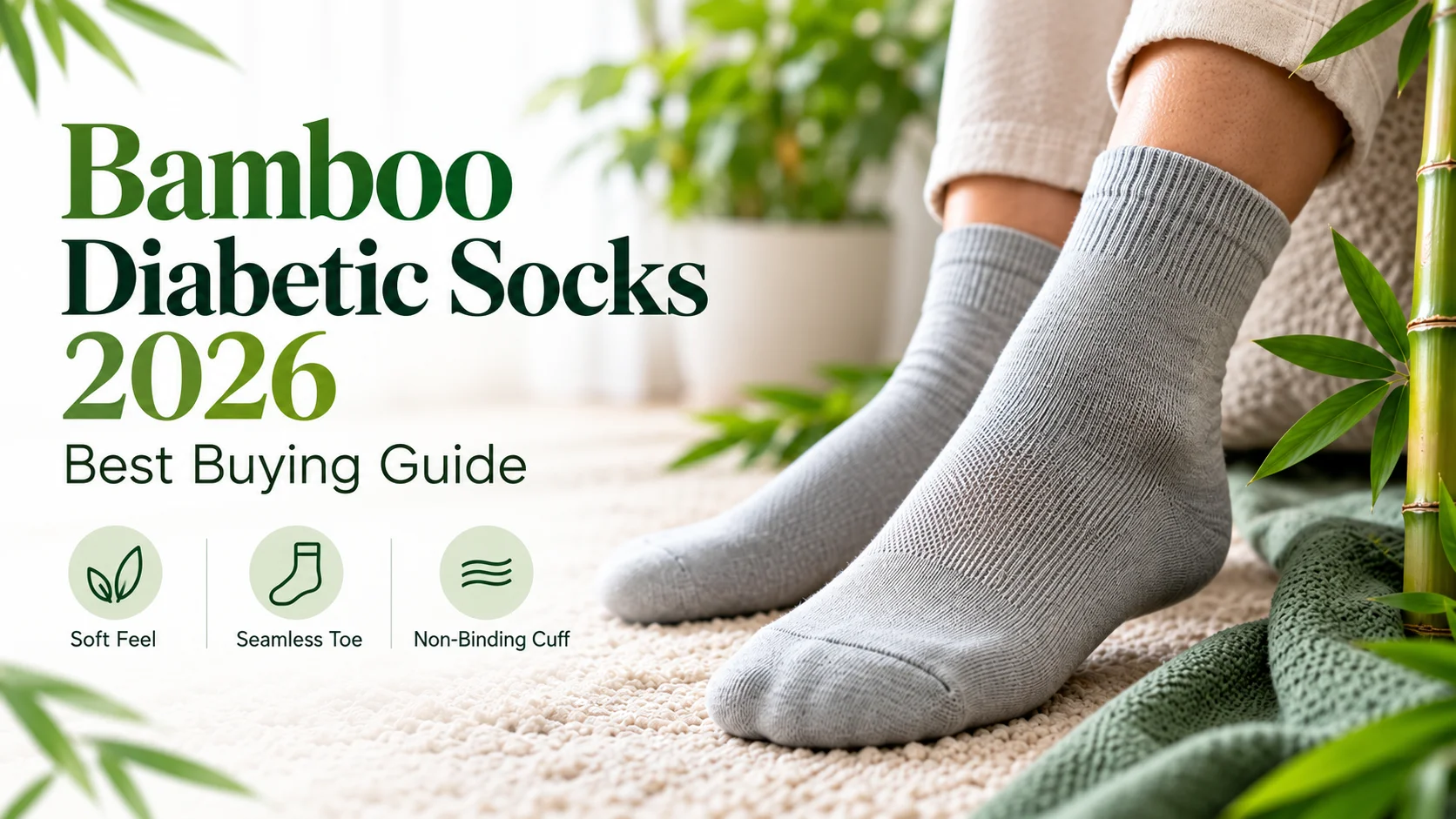
A sock can feel soft in your hand and still be wrong for a sensitive foot. A tight cuff may leave a deep mark, a bulky toe seam can rub inside a shoe, and extra fabric can bunch under the heel. For people with diabetes—especially those with neuropathy, swelling, sensitive skin, or changes in foot shape—those details can matter.
Bamboo diabetic socks are popular because bamboo-derived fabrics are often soft and comfortable, but the fiber alone does not make a sock diabetic-friendly. The best bamboo socks for diabetics combine a gentle non-binding cuff, smooth toe construction, suitable cushioning, sensible moisture management, correct sizing, and enough room inside the shoe.
This guide explains what bamboo diabetic socks are, how to compare materials, how to choose for wide or swollen feet, and when non-binding socks should not be confused with medical compression.
Quick Answer: Are Bamboo Socks Good for Diabetics?
They can be. Bamboo-derived rayon or viscose can provide a soft, smooth feel that many people prefer for sensitive feet, but material is only one part of the decision. For diabetic foot protection, fit and construction are usually more important than whether the label says bamboo.
Look for:
- a non-binding, stretchable cuff that does not dig into the leg;
- a flat or seamless toe area with no hard ridge;
- a smooth interior without loose threads;
- enough cushioning for your activity without crowding the shoe;
- a size that keeps the heel aligned and prevents bunching;
- a breathable, moisture-managing blend; and
- a length that works with your footwear and calf shape.
If you have reduced sensation, a current or previous foot ulcer, significant swelling, peripheral artery disease (PAD), unexplained redness or warmth, or other high-risk foot problems, sock selection should be part of a broader foot-care plan with your healthcare professional. Current American Diabetes Association guidance places particular emphasis on loss of protective sensation, PAD, previous ulcers and other factors that increase foot risk.
What Are Bamboo Diabetic Socks?
“Bamboo diabetic socks” usually means diabetic-style socks made partly from rayon or viscose derived from bamboo.
In the United States, the Federal Trade Commission distinguishes actual bamboo fiber from rayon or viscose made using bamboo as the cellulose source. Soft apparel commonly marketed as bamboo is generally regenerated cellulose fiber rather than mechanically processed raw bamboo fiber.
A bamboo plant’s properties do not automatically survive the rayon-making process. “Bamboo rayon” and “bamboo viscose” generally describe the same regenerated-cellulose family, so “naturally antibacterial” or “antimicrobial” claims should not be accepted solely because bamboo appears in the name.
A well-designed pair may combine bamboo-derived viscose with polyester, nylon, spandex or elastane for stretch, shape retention and durability.
What Makes a Good Bamboo Diabetic Sock Different?

The best bamboo diabetic socks are not simply the loosest socks available. They should stay in place without creating concentrated pressure.
Non-Binding Cuff
A non-binding cuff uses a wider, gentler structure rather than a narrow, tight elastic band. The goal is to hold the sock up without digging into the ankle or calf.
If the cuff creates persistent or deep grooves, pain, discoloration, numbness or a sharply rolled edge, remove the sock and reassess the fit. People with reduced sensation may not reliably feel developing pressure or irritation, which makes visual inspection particularly important.
“Without elastic” can also be misleading. Some non-binding bamboo diabetic socks still contain small amounts of spandex or elastane throughout the knit to improve stretch and help the sock retain its shape.
Seamless or Smooth Toe
“Seamless” varies by brand. Some socks have a nearly flat toe closure; others simply use a flatter seam than a standard athletic sock.
Turn the sock inside out and feel across the toe. Smooth construction is especially relevant with neuropathy, toe deformity, sensitive skin or a history of friction.
Reduced sensation can make small injuries harder to notice, which is one reason daily inspection and reducing avoidable rubbing are important parts of diabetic foot care.
Cushioning Without Shoe Crowding
Cushioned bamboo diabetic socks can add softness under the heel and forefoot. More padding, however, is not automatically better.
If thick cushioning makes the shoe tighter, it can increase pressure around the toes, sides of the foot or top of the instep.
A light-cushion crew sock may be better for fitted walking shoes, while a more padded style may work in roomier work shoes or boots.
Moisture Management and Breathability
“Moisture-wicking” is often used loosely in sock marketing.
Bamboo-derived viscose can absorb moisture and feel comfortable, but real-world drying and sweat management depend on the complete blend, knit, thickness and shoe environment. Odor-control claims are also separate from proven antimicrobial activity.
For sweaty feet, compare the full fiber content rather than buying by the word bamboo alone. A blend containing synthetic fibers may provide better shape retention or drying characteristics than a very high-viscose sock.
Change into a clean, dry pair if your socks become damp.
Best Bamboo Diabetic Socks by Need

There is no single best pair for every person. Start with the problem you are trying to solve.
| Product / Type | Key Features to Look For | Good Choice For | Style | Amazon |
|---|---|---|---|---|
| Yomandamor Bamboo Diabetic Socks | Bamboo-derived viscose blend, non-binding top, smooth/seamless-style toe | Everyday wear and people prioritizing softness | Crew | Check Price on Amazon |
| Hugh Ugoli Bamboo Diabetic Socks | Bamboo-derived viscose blend, soft knit, comfortable stretch top | Everyday and dress/casual footwear | Crew / Dress | Check Price on Amazon |
| Pembrook Bamboo Diabetic Socks | Loose/non-binding top, soft bamboo-derived blend, roomy construction | Wider feet or calves and everyday wear | Crew | Check Price on Amazon |
| Doctor’s Choice Bamboo Diabetic Socks | Non-binding construction, soft interior, cushioning-focused design | Walking and longer daily wear | Crew | Check Price on Amazon |
| Extra-Wide Bamboo Diabetic Socks | High-stretch opening, bamboo-derived viscose blend, roomy foot/leg construction | People needing additional foot or calf room | Crew | Check Price on Amazon |
| Need | Prioritize | Watch For |
|---|---|---|
| Sensitive feet | Soft interior, flat toe, light cushioning | Rough yarn, raised seams |
| Neuropathy | Smooth construction, secure fit, easy visual inspection | Bunching, wrinkles, unnoticed pressure |
| Swollen feet/ankles | Extra-stretch cuff, wide opening, flexible sizing | Narrow elastic, deep cuff marks |
| Wide feet | Wide forefoot, adequate toe room, appropriate sizing | Sizing up and creating heel bunching |
| Wide calves | Published calf range for crew or knee-high styles | Rolling or constriction |
| Walking | Secure heel, moisture management, moderate cushioning | Sliding or excessive thickness |
| Work | Durability, shoe-compatible thickness, cushioning | Excess bulk in work shoes |
| Summer | Lighter knit, breathable footwear, faster-drying blend | Heavy padding |
| Winter | Warmer knit with adequate shoe room | Thick socks compressing the toes |
| Dress use | Thin, smooth knit and gentle cuff | Tight dress-shoe fit |
Bamboo Diabetic Socks for Neuropathy or Numb Feet
Socks cannot treat diabetic neuropathy or restore lost sensation.
Their role is mechanical: a smooth, appropriately fitted sock may help limit unnecessary rubbing, pressure from seams and skin irritation while providing a barrier between the foot and shoe.
Because peripheral neuropathy can reduce the ability to notice pressure, blisters or other injuries, daily foot checks are especially important.
Inspect the inside of your shoes as well. A pebble, folded insole, rough shoe seam or bunched sock can cause a problem even when the sock fabric itself is soft.
Bamboo Socks for Swollen Feet and Wide Calves
For swollen feet, “loose top” should mean accommodating—not oversized everywhere.
If the foot portion is too large, extra material may fold beneath the sole, heel or toes and create additional rubbing.
For crew or knee-high bamboo diabetic socks, check calf circumference when the manufacturer provides it. A sock stretching over the calf does not necessarily mean it fits properly.
If swelling is new, one-sided, severe, painful or unexplained, do not treat the sock purchase as the solution. Significant or unexplained swelling should be medically evaluated.
Bamboo Diabetic Socks for Men, Women and Seniors
Men’s and women’s labels can help with shoe-size ranges, but actual foot dimensions matter more.
For bamboo diabetic socks for men, pay attention to larger shoe sizes, forefoot width and calf circumference. A “one-size” sock may stretch enough to go on while still being too short through the foot or too restrictive around a larger calf.
For women’s bamboo diabetic socks, petite feet may need a shorter heel-to-toe length so the heel pocket sits correctly. Wide-foot and wide-calf options should publish useful measurements rather than simply promising “extra stretch.”
Seniors may value easier donning, a soft cuff and a stable fit that does not slide inside the shoe.
For someone whose vision, mobility or other physical limitations make daily foot inspection difficult, ADA guidance notes that assistance from another person may be necessary for appropriate surveillance.
Ankle, Crew, Knee-High, Dress or Work: Which Length Is Best?
Sock height should match footwear, activity and leg fit.
Ankle socks are cooler and can work well with sneakers, but make sure the top edge does not sit directly where the shoe collar rubs.
Crew socks are among the most versatile choices for everyday wear, walking and many work shoes. They provide more lower-leg coverage without reaching the knee.
Knee-high diabetic socks can provide warmth and skin coverage, but they should not automatically be assumed to provide graduated compression. Check the cuff and calf fit carefully.
Bamboo diabetic dress socks should be thin enough that your dress shoes still fit correctly. A soft sock does not help if the combined shoe-and-sock fit squeezes the toes.
Bamboo diabetic work socks may need greater heel and forefoot cushioning as well as increased durability. Choose cushioning based partly on how much space your work shoe or boot provides.
Bamboo vs. Cotton vs. Merino Wool vs. Synthetic Diabetic Socks

Material comparisons can help narrow your choice, but sock construction may matter more than the fiber name.
| Material | Typical Strengths | Possible Trade-Offs |
|---|---|---|
| Bamboo-derived viscose/rayon | Soft hand feel, comfortable against sensitive skin, absorbent | Durability and drying vary by blend; antimicrobial properties should not be assumed |
| Cotton/cotton blend | Familiar feel, widely available, comfortable | Some constructions may retain moisture longer when heavily sweaty |
| Merino wool/wool blend | Useful thermal comfort, cushioning potential | Often more expensive; thickness varies |
| Polyester/nylon blends | Shape retention, durability, potentially faster drying | Feel varies; poor seams or cuffs can still irritate |
| Mixed blends | Can balance softness, stretch, durability and drying | Performance depends on fiber percentages and knit |
Is Bamboo Better Than Cotton for Diabetic Feet?
Not automatically.
A well-fitting cotton-blend diabetic sock with a smooth toe and gentle cuff may be better than a bamboo sock that bunches, slips or constricts.
If softness is your priority, bamboo-derived viscose may be appealing. If drying speed or durability matters more, a blended synthetic construction may work better.
For cool-weather temperature comfort, merino wool blends are also worth comparing.
The key point is simple: choose the construction and fit first, then choose the material.
How Should Bamboo Diabetic Socks Fit?
A good fit is secure, smooth and non-restrictive. The sock should not twist, wrinkle, slide down or pull the toes together.
Use these six checks:
- Match the heel. The heel pocket should sit on your heel, not under the arch or high on the Achilles area.
- Check toe space. Your toes should not be pulled backward or compressed by a sock that is too short.
- Inspect the cuff. It should remain in position without creating concentrated pressure.
- Check the calf. For longer socks, compare your calf circumference with the brand’s sizing chart.
- Put your shoes on. A sock that fits comfortably while barefoot may be too thick inside your normal footwear.
- Recheck after wear. Look for redness, persistent indentation, rubbing, dampness or bunched material when you remove the socks.
Do not automatically size up just because you have wide feet.
Increasing the sock length can place the heel pocket incorrectly and create extra folds. When available, choose a genuinely wide or extra-wide pattern designed for the additional circumference.
Bamboo Diabetic Socks vs. Compression Socks

A typical non-binding diabetic sock is designed for comfort, low-friction construction and reduced cuff restriction. It does not necessarily apply measured pressure.
Graduated compression socks are different. They are engineered to apply specified pressure, expressed in millimeters of mercury or mmHg, generally applying greater pressure near the ankle and progressively less farther up the leg.
Common commercial categories include 15–20 mmHg and 20–30 mmHg, but a higher number is not automatically more appropriate.
Diabetes by itself does not mean that every person must avoid compression. It also does not mean compression is appropriate for everyone.
Peripheral artery disease, severely reduced sensation, open wounds, skin infection and significant or unexplained swelling can change the risk-benefit decision. Current clinical guidance recommends additional caution and professional assessment in these situations.
If you have diabetes and are considering bamboo compression socks, particularly 15–20 mmHg, 20–30 mmHg or stronger garments, ask a qualified healthcare professional what type and pressure—if any—is appropriate for you.
A sock marketed as “circulation-friendly” is not the same as a medical compression garment, and a non-binding cuff should not be interpreted as a treatment for poor circulation.
Can You Wear Bamboo Diabetic Socks All Day or to Bed?
Many people wear diabetic-style socks through a normal day, but wear time depends on fit, moisture, skin condition and medical needs.
Remove them if they become damp, wrinkled, painful, unusually tight or irritating.
If your feet get cold at night, the NIDDK advises using socks rather than direct heat sources such as heating pads or hot-water bottles, which may cause injury when sensation is reduced.
A bedtime sock should be clean, dry and non-constrictive.
Sleeping in bamboo diabetic socks is not a treatment for poor circulation or neuropathy. Persistent coldness, color changes, pain, numbness or other unusual symptoms should be discussed with a healthcare professional.
How to Wash and Care for Bamboo Diabetic Socks
Always follow the manufacturer’s care label because bamboo blends can vary significantly.
As a general strategy:
- wash socks after a day of wear, or sooner if they become sweaty or soiled;
- consider mild detergent if your skin is sensitive;
- avoid excessive heat unless the care instructions permit it;
- reshape the socks after washing if necessary;
- inspect the inside for pilling, hardened areas or loose threads; and
- replace pairs that have lost their shape, developed holes, or started sliding and bunching.
There is no universal lifespan for bamboo diabetic socks. Replace them based on fit and condition rather than a fixed number of months.
Bamboo-viscose blends can shrink or change shape with heat depending on their construction, so the individual care label is more useful than a universal “bamboo sock” washing rule.
Common Bamboo Diabetic Sock Buying Mistakes
Buying for Material Instead of Construction
“Bamboo” sounds comfortable, but a tight elastic cuff or bulky toe seam can defeat the point.
Evaluate the entire sock rather than the material name alone.
Assuming Non-Binding Means Compression
A loose-top diabetic sock normally does not have a specified mmHg pressure.
If medical compression is needed, compression level and fit are separate decisions that should be made appropriately for the condition being addressed.
Choosing Maximum Cushioning
Extra padding takes up space inside footwear.
If your shoes already fit closely, a thinner diabetic sock may provide a better overall fit than a heavily cushioned pair.
Ignoring the Size Chart
Shoe size alone may not be enough for wide feet, swollen feet or knee-high socks.
Look for foot, ankle and calf measurements where relevant.
Trusting Antibacterial or Hypoallergenic Marketing Automatically
The FTC specifically warns that rayon made from bamboo should not be presumed to retain the bamboo plant’s antimicrobial characteristics.
Product-specific antimicrobial or skin-sensitivity claims need their own evidence.
When reading bamboo diabetic sock reviews, use them mainly for clues about sizing, shrinkage, softness and durability—not as proof of a medical benefit.
Daily Foot-Care Habits Matter More Than the Sock Label
The American Diabetes Association, CDC and NIDDK emphasize regular foot surveillance for people with diabetes, particularly because nerve damage can reduce the ability to notice an injury.
Check the tops, soles, heels and spaces between your toes for cuts, blisters, redness, swelling, drainage, skin breakdown or other changes.
Wear well-fitting shoes with your socks. If sensation is reduced, inspect the inside of the shoe for foreign objects, folded material or rough areas before putting it on.
Footwear that squeezes the toes can create unwanted pressure even when you are wearing an otherwise excellent diabetic sock.
Seek prompt professional care for an open sore or ulcer, signs of infection, unexplained swelling, significant color changes, or a foot that becomes unusually red, warm and swollen. Current ADA guidance recommends urgent evaluation for certain unexplained combinations of swelling, redness and increased skin temperature in people with diabetic neuropathy.
Do not rely on a softer sock to manage a potentially serious foot problem.
Frequently Asked Questions
Are bamboo diabetic socks really made from bamboo?
Most soft “bamboo” socks are made from rayon or viscose produced using bamboo as the cellulose source. Under U.S. textile guidance, that is different from fabric made directly from bamboo fiber.
Are bamboo diabetic socks antibacterial?
Do not assume so.
The FTC states that processed rayon made from bamboo does not automatically retain the bamboo plant’s antimicrobial properties. A specific antimicrobial claim needs appropriate supporting evidence.
Are bamboo diabetic socks hypoallergenic?
“Hypoallergenic” should not be treated as a guarantee that a sock cannot irritate your skin.
The fiber blend, dyes, textile finishes, detergent residue, seams and fit can all influence skin comfort. People with known skin sensitivities should pay attention to the complete product and any previous reactions.
Do bamboo socks improve circulation?
A soft, non-binding cuff may avoid unnecessary constriction, but ordinary bamboo diabetic socks are not a treatment for poor circulation.
Medical compression is a separate intervention that applies controlled pressure and has specific indications and precautions.
Do bamboo socks help diabetic neuropathy?
They do not treat nerve damage or restore sensation.
A smooth, soft, well-fitting sock may reduce avoidable rubbing and pressure from seams. Daily foot inspection and appropriate medical foot care remain especially important when protective sensation is reduced.
Are bamboo socks good for swollen feet?
They may be comfortable if the sock has an accommodating foot shape and stretchable cuff.
New, severe, painful, one-sided or otherwise unexplained swelling should be medically assessed rather than managed only by changing socks.
Are bamboo diabetic socks good for summer and winter?
A thinner bamboo blend can be comfortable in warm weather, while a heavier blend may add warmth in winter.
Choose thickness according to the available space in your footwear. A very thick winter sock can be counterproductive if it causes the shoe to compress the toes.
How often should bamboo diabetic socks be changed?
Changing to a clean pair at least daily is a practical approach, and socks should be changed sooner if they become wet, sweaty or soiled.
Regular changes also give you an opportunity to inspect the socks and your feet.
Where Can I Buy Bamboo Diabetic Socks?
Bamboo diabetic socks are sold by major U.S. retailers, pharmacies, medical-supply sellers and specialty sock companies.
Before buying, compare the actual fiber content, size chart, toe-seam construction, cuff design, cushioning, sock thickness, calf sizing, care instructions and return policy rather than relying only on the words “bamboo” or “diabetic” in the product name.
Final Takeaway
The best bamboo diabetic socks are not defined by bamboo alone.
Start with a smooth toe, non-binding cuff, correct size, shoe-compatible thickness and a stable fit that does not bunch or rub. Then use material preference—bamboo-derived viscose, cotton, merino wool or synthetic blends—to fine-tune softness, thermal comfort, moisture handling and durability.
For uncomplicated feet, that approach can make everyday sock shopping much clearer.
If you have diabetic neuropathy with loss of protective sensation, PAD, a current or previous foot ulcer, significant swelling, wounds or other high-risk foot concerns, involve a podiatrist or another qualified healthcare professional in your foot-care plan.
Medical Information Notice: This article provides general educational information and is not a substitute for individualized medical advice. If you have diabetes with reduced sensation, circulation problems, significant swelling, wounds, skin infection or another foot concern, ask a qualified healthcare professional what sock type—and what compression level, if any—is appropriate for you.
Sources & Medical References
- American Diabetes Association Professional Practice Committee. Retinopathy, Neuropathy, and Foot Care: Standards of Care in Diabetes—2026. Diabetes Care, 2026.
- National Institute of Diabetes and Digestive and Kidney Diseases (NIDDK). Diabetes & Foot Problems.
- NIDDK. Peripheral Neuropathy / Diabetic Neuropathy.
- Centers for Disease Control and Prevention. Your Feet and Diabetes and Promoting Foot Health.
- Federal Trade Commission. Bamboo Textiles and “Bamboo” Fabrics: Consumer Advice.
- MedlinePlus. Compression Stockings.
- Cleveland Clinic. What You Need to Know About Compression Socks. Updated July 2026.

2 thoughts on “Bamboo Diabetic Socks 2026: Best Buying Guide”