

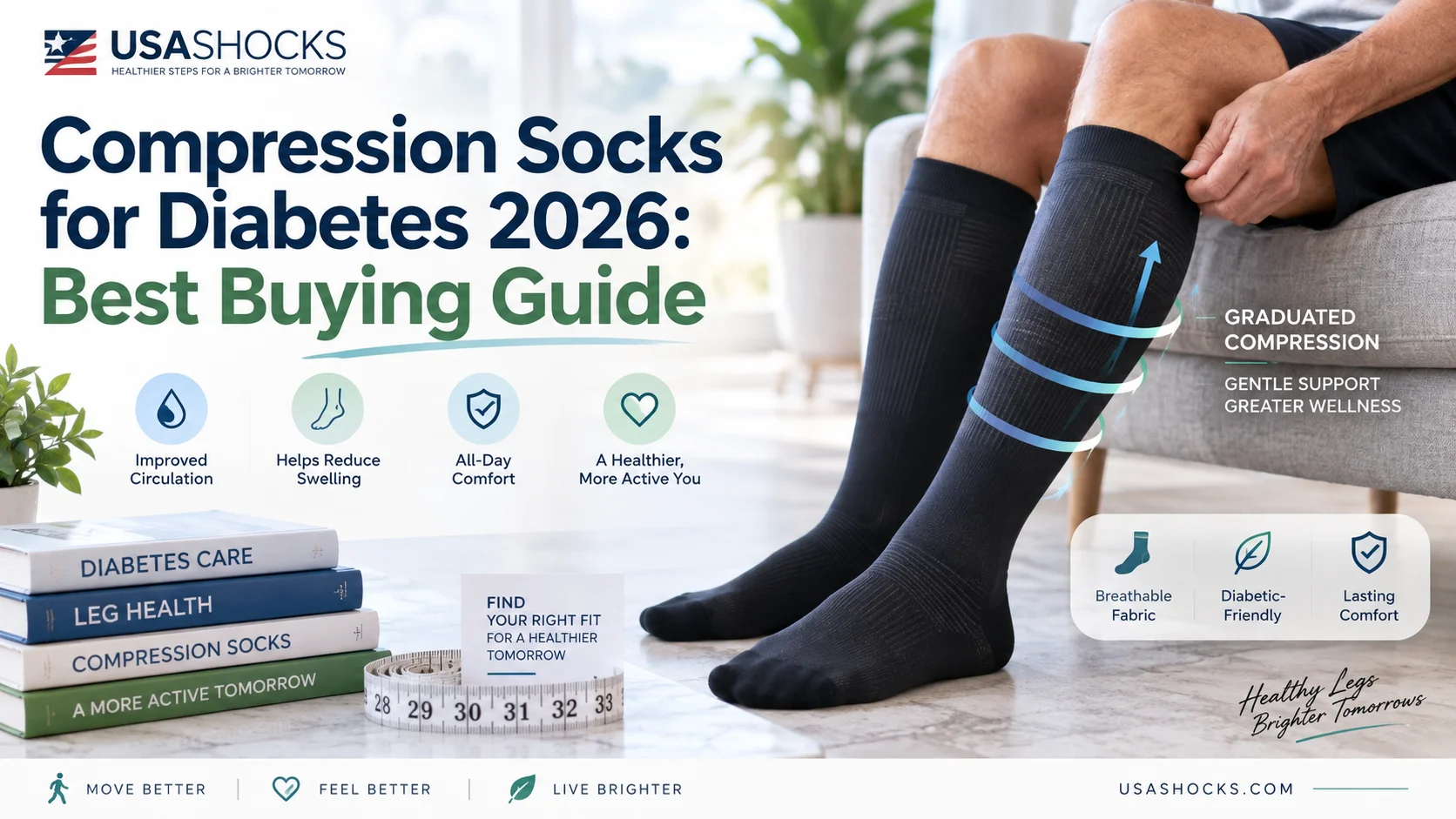
If you have diabetes and swollen ankles or tired legs, compression socks may sound like an easy solution. But diabetes can also affect sensation and arterial blood flow, so the answer is not simply “wear them” or “avoid them.”
Compression socks for diabetes may help selected people manage swelling or venous circulation problems. They require more caution when peripheral artery disease (PAD), significant neuropathy, wounds, infection, or unexplained swelling is present.
This guide explains safety, compression levels, fit, diabetic-friendly features, and when professional assessment matters.
Quick Answer: Can People With Diabetes Wear Compression Socks?
Yes, some people with diabetes can wear compression socks safely, but diabetes alone does not determine whether compression is appropriate. The key questions are why the leg is swelling, whether arterial circulation is adequate, whether sensation is reduced, whether the skin is intact, and what pressure level is being considered.
Compression mainly supports venous return and swelling control. It does not treat diabetes, reverse neuropathy, or correct narrowed arteries. Known or suspected PAD, major sensory loss, ulcers, infection, color changes, or significant unexplained swelling warrant professional guidance before medical compression.
Why Diabetes Changes the Compression-Sock Decision

Two circulation problems are often confused.
Venous circulation carries blood back toward the heart. When leg veins or their valves do not work efficiently, blood and fluid can pool in the lower legs. Graduated compression can help oppose that pooling by applying more pressure near the ankle and less farther up the leg.
Arterial circulation carries oxygen-rich blood from the heart to the legs and feet. Peripheral artery disease narrows or blocks arteries and can reduce blood supply to tissues. In significant PAD, inappropriate sustained compression can create risk rather than benefit.
Diabetic peripheral neuropathy may cause numbness, tingling, burning, or loss of protective sensation. A person who cannot reliably feel pressure may miss a sock fold, tight band, blister, or developing sore. NIDDK notes that loss of sensation can allow injuries and sores to go unnoticed.
So “poor circulation” is too vague for a safe buying decision. Venous swelling and reduced arterial blood flow are different problems and may require different plans.
Who May Benefit—and Who Should Get Checked First?
Compression may be considered when a person with diabetes has a condition that normally responds to it, such as medically evaluated venous insufficiency or lower-leg edema. More caution is needed with neuropathy, previous ulcers, abnormal pulses, PAD, significant skin changes, or difficulty checking the feet.
| Situation | What It Means for Sock Selection |
|---|---|
| Mild ankle or lower-leg swelling with adequate arterial circulation | Compression may be useful if the cause of swelling is understood and the pressure level is appropriate |
| Chronic venous insufficiency | Graduated compression is commonly used, but diabetes-related foot risks still matter |
| Diabetic neuropathy or reduced sensation | Fit, seams, pressure points, and daily skin checks become especially important |
| Known or suspected PAD | Do not self-select stronger compression; circulation should be assessed |
| Active foot ulcer, infected wound, significant skin breakdown, or gangrene | Requires clinical wound or vascular guidance rather than routine OTC sock selection |
| New, severe, one-sided, or unexplained swelling | The cause should be evaluated instead of assuming socks are the answer |
A useful rule is to separate the need for compression from the ability to use compression safely. Those are two different decisions.
What Compression Level Is Best for Diabetes?

Compression strength is commonly described in millimeters of mercury, or mmHg. The number represents the pressure a garment is designed to apply, typically with the highest pressure around the ankle in a graduated knee-high sock.
Common retail ranges include:
- 8–15 mmHg: mild compression
- 15–20 mmHg: moderate compression
- 20–30 mmHg: firm compression
- 30–40 mmHg: stronger medical compression
Labels vary among manufacturers, so the stated mmHg range is more useful than marketing words such as “light” or “firm.” Cleveland Clinic similarly identifies 8–15, 15–20, and 20–30 mmHg as common compression ranges and advises medical guidance when compression is being used for a health condition.
Is 15–20 mmHg Safe for Diabetics?
It may be appropriate for some people with diabetes, but it should not be treated as automatically safe for everyone. A person with intact skin, good sensation, and adequate arterial circulation is different from someone with PAD, numb feet, an ulcer history, or fragile skin.
Can Diabetics Wear 20–30 mmHg Compression Socks?
Some can, particularly when it has been selected for a medical reason. But 20–30 mmHg is not a universal “best” level. Suspected circulation disease, substantial neuropathy, previous foot wounds, or uncertainty about blood flow are reasons to ask a clinician first.
A randomized trial in selected adults with diabetes and lower-extremity edema found that 18–25 mmHg socks reduced ankle and calf swelling without measured deterioration in vascular tests. Participants were screened, so this does not justify one pressure level for everyone with diabetes.
This distinction matters: stronger compression is not automatically better compression.
Compression Socks for Diabetic Swelling and Edema
Swelling is one of the main reasons people search for diabetic compression socks. Graduated compression can help reduce lower-leg fluid accumulation when swelling is related to venous problems or another condition for which compression has been judged appropriate.
The first question, however, should be why the swelling is happening.
Leg and ankle swelling has many possible causes, including venous disease, medications, heart or kidney problems, lymphatic conditions, infection, and injury. Compression socks do not identify the cause. New, rapidly worsening, painful, markedly one-sided, or otherwise concerning swelling should be evaluated rather than treated by simply buying a tighter sock.
After compression has been deemed appropriate, knee-high graduated socks are a common option. The garment should lie smoothly without rolling at the top or creating a narrow pressure band.
A clinical trial involving people with diabetes and mild-to-moderate lower-extremity edema supports the potential value of properly selected mild compression, but it also highlights why screening matters: participants underwent vascular assessment rather than being given compression solely because they had swollen legs.
Compression Socks and Diabetic Neuropathy

Compression socks do not repair damaged nerves or cure diabetic neuropathy. Their possible role is separate: they may be used for swelling or venous circulation when compression is otherwise appropriate.
Neuropathy changes the safety equation because numbness can reduce your ability to detect excess pressure, bunching, heat, rubbing, or skin injury. NIDDK advises people with diabetes, especially those with neuropathy, to check their feet regularly for cuts, blisters, redness, swelling, and other changes.
If you have reduced sensation and use compression under professional guidance, inspect your feet and lower legs after removing the socks. Look for persistent pressure marks, new redness, blisters, broken skin, color changes, or places where the sock has folded or dug in.
Do not use “it doesn’t hurt” as proof that the sock fits correctly when sensation is reduced.
An international consensus statement on medical compression specifically recommends extra caution in people with diabetes or neuropathy because excessive localized compression from an ill-fitting garment can contribute to nerve or tissue injury.
Diabetic Socks vs. Compression Socks

These two product categories solve different problems.
| Feature | Non-Binding Diabetic Socks | Compression Socks |
|---|---|---|
| Main goal | Reduce friction, constriction, and pressure points; support foot comfort | Apply measured pressure to support venous return and help manage swelling |
| Top band | Usually soft and non-binding | Designed to maintain therapeutic compression without rolling |
| Toe seam | Often seamless or very flat | Varies; diabetes-friendly versions should minimize friction |
| Cushioning | Often included | Varies by product |
| Pressure level | Usually little or no medical compression | Rated in mmHg |
| Best fit for | Sensitive feet and routine foot protection when compression is not needed | People with an appropriate reason for compression and suitable circulation |
A diabetic compression sock tries to combine both goals: measured graduated compression in the leg plus diabetes-friendly features such as a smooth toe, soft interior, moisture management, and protective cushioning.
If your main problem is friction, sensitive skin, or a tight conventional sock cuff—but you do not have a clinical reason for compression—a non-binding diabetic sock may be the more logical product.
If the main issue is medically evaluated venous swelling, a properly selected compression garment may be more appropriate.
Best Features to Look for in Diabetic Compression Socks

The best choice is the pair that matches the medical purpose, pressure level, measurements, skin needs, and ability to put it on correctly.
| Product | Compression | Features to Compare | Good Choice For | Amazon |
|---|---|---|---|---|
| SIGVARIS Diabetic Compression Socks | 18–25 mmHg | Padded sole, invisible toe seam, moisture-wicking yarn, compression-free foot, multiple leg lengths | Readers whose clinician has recommended medical graduated compression and who want diabetes-focused construction | Check Price on Amazon |
| SIGVARIS EverSoft Diabetic Socks | 8–15 mmHg | Padded heel/toe/sole, low-friction toe seam, soft stretch band, compression-free foot | People comparing a milder compression option and sensitive-foot construction | Check Price on Amazon |
| JOBST SensiFoot Diabetic Knee High | 8–15 mmHg | Smooth toe seam, extra padding in foot/heel/toe, moisture-wicking acrylic yarn | Mild compression and cushioned diabetic-friendly construction | Check Price on Amazon |
| Dr. Segal’s Compression Socks | 15–20 mmHg | Graduated compression, multiple styles, everyday-focused design | People specifically advised or otherwise appropriate for moderate everyday compression | Check Price on Amazon |
| Sockwell Lifestyle Compression Socks | 15–20 or 20–30 mmHg | Graduated compression, merino/bamboo blend, multiple sizing/style options | Readers comparing material comfort and several compression strengths | Check Price on Amazon |
1. Graduated Compression
For many lower-leg uses, graduated compression means the pressure is greatest near the ankle and decreases up the calf.
Look for a stated mmHg range rather than vague marketing claims such as “circulation support.”
2. Correct Ankle and Calf Sizing
For knee-high compression, ankle and calf circumference can matter more than shoe size alone.
Follow the manufacturer’s chart. If your ankle and calf fall into different sizes, do not guess; a medical supply fitter can help.
A person with a wide calf should not simply buy a larger shoe-size-based sock. That can produce an inaccurate fit around the ankle. Look for a dedicated wide-calf size that accommodates both measurements.
3. Appropriate Length
A sock that is too long can bunch behind the knee; one that is too short can sit incorrectly on the calf. Petite and tall users should check length options.
4. Smooth Toe Construction
A seamless toe or flat toe seam removes one potential friction point.
That becomes particularly useful when the feet are sensitive or sensation is reduced. NIDDK specifically recommends socks that fit well and notes that seamless socks can be preferable for diabetes-related foot protection.
5. Moisture Management and Breathability
Look for breathable, moisture-managing fabric. Synthetic performance or merino-wool blends may handle moisture well; cotton can stay wet once damp.
Bamboo-derived rayon may feel smooth, but fiber name alone does not guarantee dryness, durability, or fit.
6. Cushioning Without Overcrowding the Shoe
Light cushioning at the heel or sole may improve comfort and reduce friction, but thick socks take up shoe volume.
A protective sock that makes your shoe too tight can create a new pressure problem.
7. A Top That Stays Flat
The top should not roll into a narrow band. Rolling or folding compression fabric concentrates pressure and can produce a tourniquet-like effect.
8. Ease of Putting On and Taking Off
Firmer socks require more hand strength and flexibility.
If donning is difficult, a donning aid or professionally fitted alternative may be safer and easier.
How to Measure and Check the Fit
Measure when swelling is relatively low, often in the morning, and follow the exact chart for the product you are considering.
Typical knee-high measurements include:
- Measure the narrowest part of the ankle above the ankle bone.
- Measure the widest part of the calf.
- Measure lower-leg length if the brand requests it.
- Use shoe size only as an additional sizing input when the chart includes it.
Once on, the heel should sit in its pocket and the fabric should be smooth, without twists or creases.
The sock should feel snug, not sharply painful or pinching. With neuropathy, visual inspection matters because discomfort may not provide an adequate warning.
How to Put Diabetic Compression Socks On Safely
Compression socks are usually easiest to apply before substantial daytime swelling develops. MedlinePlus and other clinical guidance commonly recommend applying stockings early in the day when leg swelling is lower.
- Make sure the skin is dry and inspect the foot before dressing.
- Turn the stocking inside out to the heel rather than bunching the entire sock into a tight ring.
- Place the foot into the sock and position the heel accurately.
- Gradually ease the fabric over the ankle and up the calf.
- Smooth wrinkles instead of pulling hard at the top.
- Do not fold the cuff down.
- Recheck the toes, heel, ankle, and top band once the sock is in place.
If pulling the sock on repeatedly scrapes the skin, consider a donning aid or ask a fitter about an easier-to-apply design.
How Long Should People With Diabetes Wear Compression Socks?
Wear time depends on the reason for compression, pressure level, skin, circulation, and clinical instructions.
Routine compression is commonly put on in the morning and removed before bed. Sleeping in it is generally unnecessary unless a healthcare professional gives specific nighttime instructions. Removing the socks also provides a chance to inspect the feet and legs.
Do not assume that wearing compression 24 hours a day produces greater benefit.
When Should You Remove Compression Socks?
Remove the socks and inspect the skin for new pain, significant discomfort, a rolling cuff, persistent redness, blistering, skin breakdown, or unexpected color or temperature change.
With neuropathy, do not wait for pain. Reduced sensation may hide a problem.
Open wounds, infection, worsening discoloration, or concerning circulation symptoms need prompt medical advice. NIDDK recommends contacting a healthcare professional for diabetic foot sores, redness, warmth, persistent wounds, and other potentially significant foot changes.
Common Buying Mistakes
Choosing the strongest compression available. More pressure is not automatically more effective or safer.
Buying by shoe size alone. Knee-high compression depends heavily on ankle and calf dimensions.
Sizing up to accommodate a wide calf. That can make ankle compression inaccurate. Choose a wide-calf size designed for your actual measurements.
Ignoring sock length. Excess fabric behind the knee can bunch and create pressure.
Assuming “diabetic” means “compression.” Many diabetic socks are intentionally non-binding and provide little or no graduated medical compression.
Assuming “compression” means “diabetic-friendly.” Standard compression stockings may have seams, textures, or foot construction that are less suitable for sensitive feet.
Wearing a wrinkled sock. Folds concentrate pressure instead of distributing it evenly.
Keeping worn-out socks too long. Loss of elasticity can change fit and pressure distribution. Follow the manufacturer’s care and replacement guidance rather than relying on appearance alone.
A Practical Buying Checklist
Before buying compression socks for diabetes, ask:
- What problem am I trying to solve—venous swelling, prolonged standing, another diagnosed condition, or simply foot comfort?
- Has arterial circulation been assessed if I have PAD risk, weak pulses, wounds, or significant numbness?
- What mmHg range is appropriate for my situation?
- Does the size chart use ankle and calf circumference?
- Is there a wide-calf, petite, or tall option if standard proportions do not fit?
- Is the toe seam smooth?
- Is the interior free from bulky ridges?
- Is the foot cushioned without making my shoes too tight?
- Is the fabric breathable and able to manage moisture?
- Can I put the socks on and remove them without damaging my skin?
- Can I inspect my feet every day?
That checklist is more useful than chasing a single “best diabetic compression sock” label.
Frequently Asked Questions
Are Compression Socks Good for Diabetics?
They can be useful for selected people with diabetes who have an appropriate reason for compression, such as certain types of lower-leg swelling or venous insufficiency.
They are not automatically appropriate for everyone with diabetes, particularly when PAD, severe neuropathy, active wounds, or significant skin problems are present.
Why Should Diabetics Be Careful With Compression Socks?
Diabetes can affect both sensation and blood vessels.
Reduced sensation may hide pressure injury, while PAD can reduce arterial blood flow to the foot. Correct pressure, fit, circulation assessment, and skin monitoring therefore matter more than simply choosing a sock labeled “diabetic.”
Can Compression Socks Reduce Circulation?
Properly selected graduated compression is intended to support venous circulation, but excessive or inappropriate compression can be risky when arterial blood flow is significantly impaired.
People with known or suspected PAD should not self-prescribe stronger compression. International compression guidance recommends assessing arterial circulation when PAD is suspected.
Are Compression Socks Safe With Diabetic Neuropathy?
Neuropathy does not automatically prohibit compression, but loss of protective sensation raises the risk of unnoticed rubbing or pressure.
If compression is needed, professional guidance, accurate sizing, smooth construction, and regular skin checks become particularly important.
Can Compression Socks Help Neuropathy?
Compression socks do not treat the nerve damage that causes diabetic neuropathy.
A soft, well-fitted sock may improve comfort, and compression may address a separate swelling problem, but numbness, burning, or tingling should not be presented as conditions that compression socks cure.
Can Diabetics With PAD Wear Compression Socks?
That decision should be made with clinical assessment.
International compression guidance considers severe peripheral arterial disease a contraindication to sustained medical compression stockings and recommends checking arterial circulation when PAD is suspected. The appropriate approach depends on vascular measurements and the person’s clinical situation.
Can You Wear Compression Socks With a Diabetic Foot Ulcer?
Do not assume an over-the-counter compression sock is appropriate over an active diabetic foot ulcer.
Ulcers require wound care, pressure management, infection assessment, and evaluation of blood flow. Compression, if appropriate at all, should be incorporated into a clinician-directed treatment plan.
Do Compression Socks Help Swollen Ankles in Diabetes?
They may help when swelling is caused by a condition that responds to compression, such as venous insufficiency, and arterial circulation is adequate.
Swelling caused by another medical problem may require different treatment, so persistent or unexplained edema should be evaluated rather than automatically treated with compression.
Should Diabetics Sleep in Compression Socks?
Usually not unless specifically instructed by a healthcare professional.
Daytime wear with removal before bed is common. Nighttime also provides a practical opportunity to inspect the feet and lower legs for pressure areas or skin changes.
Where Can You Buy Diabetic Compression Socks?
They are available through medical supply stores, pharmacies, manufacturer websites, and online retailers.
For medical compression—especially when you have diabetes, unusual leg proportions, neuropathy, or circulation concerns—a medical supply store that can measure your ankle and calf may offer more useful fitting assistance than selecting a sock from shoe size alone.
Bottom Line
Compression socks for diabetes can be useful, but the safest choice starts with the reason for compression—not the diabetes label on the package. Venous swelling, arterial circulation, neuropathy, skin condition, and fit all change the decision.
If compression is appropriate, look for a clearly stated mmHg range, accurate ankle-and-calf sizing, smooth toe construction, breathable moisture-managing fabric, appropriate cushioning, and a top that stays flat without rolling.
Do not assume that 20–30 mmHg is better than 15–20 mmHg, and do not use a lack of pain as proof of a good fit if sensation is reduced.
For anyone with known or suspected PAD, significant numbness, an active ulcer, infection, major skin changes, or unexplained swelling, get individualized guidance from a qualified healthcare professional before choosing medical compression.
Medical Information Notice: This article provides general educational information and is not a substitute for individualized medical advice. If you have diabetes plus a diagnosed circulation disorder, substantial loss of sensation, foot wounds, significant swelling, or another medical concern, ask a qualified healthcare professional what type of compression, if any, is appropriate for you.
Sources & Medical References
- National Institute of Diabetes and Digestive and Kidney Diseases (NIDDK) — Diabetes & Foot Problems.
- NIDDK — Peripheral Neuropathy.
- American Heart Association / ACC and partner organizations — 2024 Guideline for the Management of Lower Extremity Peripheral Artery Disease.
- Rabe E, Partsch H, Morrison N, et al. — International consensus statement on risks and contraindications of medical compression treatment.
- Wu SC, Crews RT, et al. — Randomized controlled trial of mild compression socks in people with diabetes and lower-extremity edema.
- Cleveland Clinic — What You Need To Know About Compression Socks, updated July 2026.
- MedlinePlus — Compression Stockings.

1 thought on “Compression Socks for Diabetes 2026: Best Buying Guide”