

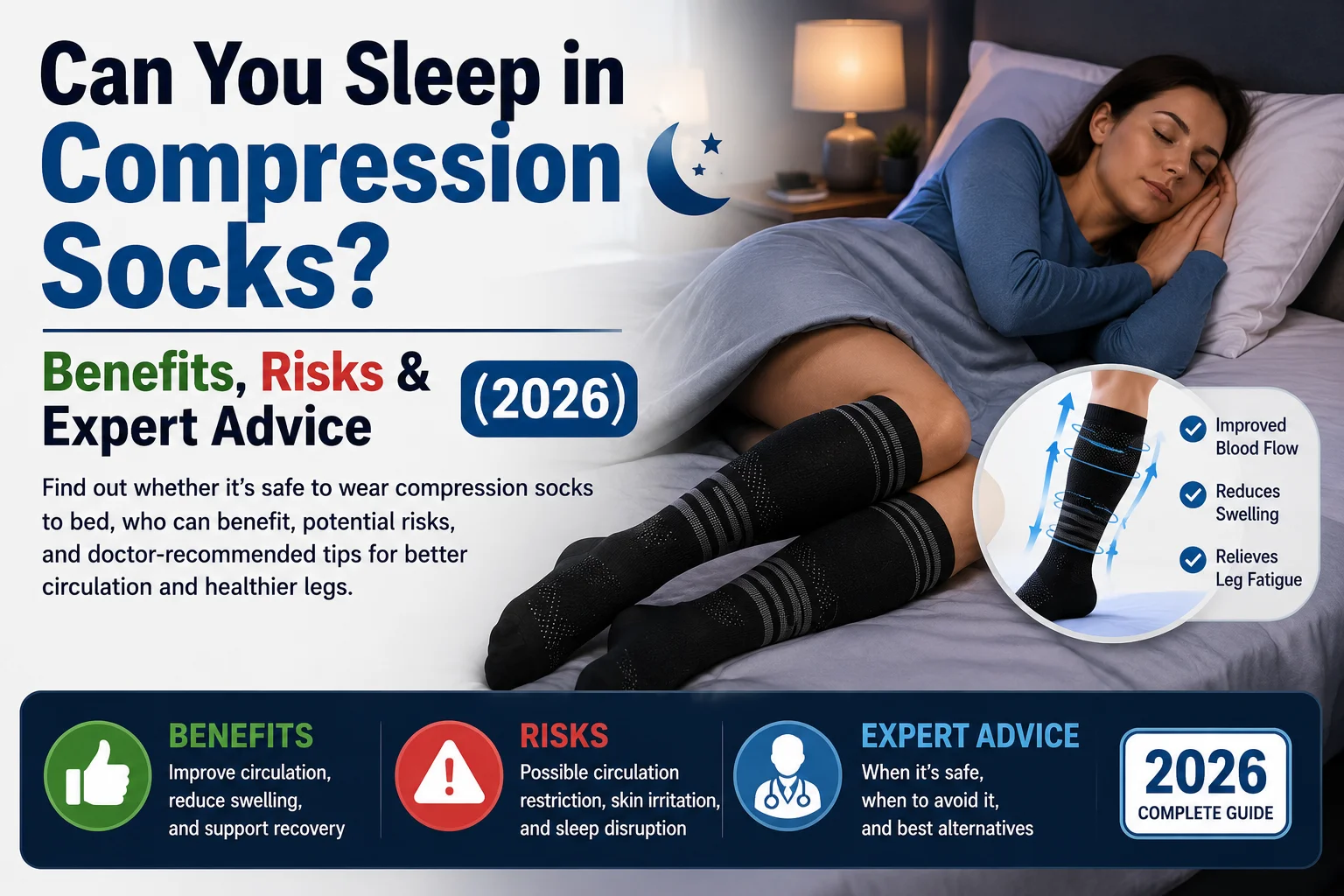
You toss off the covers after a long, exhausting day on your feet, reach down to pull off your tight socks, and a sudden thought hits you: What if I just keep them on? Wouldn’t my legs feel even better in the morning? Or maybe you’re dealing with stubborn ankle swelling, varicose veins, or restless lower legs, and you’re hoping an overnight wear session will speed up your recovery while you sleep.
It sounds like a great shortcut, but it brings up a very important question: can you sleep in compression socks, or are you accidentally setting yourself up for poor circulation, skin irritation, and a terrible night’s rest?
The short answer is that for most healthy people, sleeping in standard, tight graduated compression socks isn’t necessary and can even be counterproductive. However, like most things related to body care and circulation, the full answer depends on your health, the type of pressure your socks exert, and why you’re wearing them in the first place.
Let’s break down the science, the real-world risks, the rare exceptions where overnight wear is actually recommended, and how to get the maximum relief for your legs without compromising your sleep.
How Compression Socks Work (And Why Gravity Matters)
To understand whether can you sleep in compression socks safely, you first need to look at how these garments interact with your circulatory system during the day versus at night.
When you are standing, sitting at a desk, or walking around, gravity is constantly pulling blood and lymph fluid down toward your feet and ankles. Your vein valves have to push blood upward against gravity to return it back to your heart.
The Magic of Graduated Compression
Quality compression footwear uses what experts call graduated compression. This means the fabric squeezes most firmly at the ankle, with the pressure gradually decreasing as the sock moves up toward the calf and knee.
- At the Ankle: The maximum pressure squeezes deep veins, preventing blood from pooling in the lowest points of your legs.
- At the Calf: Medium pressure supports the calf muscle pump, assisting blood flow back upward.
- Near the Knee: Light pressure ensures smooth blood return without pinching or restricting flow behind the knee joint.
This mechanical squeeze boosts blood velocity, reduces swelling (edema), and limits that heavy, aching sensation after hours on your feet.
What Happens When You Lie Down flat?
The moment you lie flat in bed, the physics of your circulatory system change completely. Gravity is no longer pulling blood down into your lower extremities. Your legs and heart are on the same horizontal plane, which means your veins don’t have to work nearly as hard to push blood back through your system.
Because lying flat already naturally restores normal venous return, adding an artificial external squeeze overnight usually isn’t necessary. If a compression sock is too tight, poorly fitted, or rolls into a narrow band, it may cause discomfort and can interfere with normal circulation in some people. This is one reason proper sizing and medical guidance are important, particularly for people with circulation problems.
Can You Sleep in Compression Socks? The Risks of Overnight Wear

While the idea of waking up with lighter, completely painless legs sounds tempting, wearing tight compression garments to bed comes with several real risks. Unless a medical professional specifically prescribed overnight wear for a distinct medical condition, here is what can go wrong if you wear them while sleeping.
+-----------------------------------------------------------------------+
|                    DAYTIME VS. OVERNIGHT WEAR                         |
+-----------------------------------------------------------------------+
| DAYTIME (Upright Body)                OVERNIGHT (Horizontal Body)     |
| • Fights gravity pulling fluid down    • Gravity is already neutralized|
| • Keeps vein valves aligned           • Squeeze can restrict flow     |
| • Active muscles assist blood return  • Passive body raises risk of   |
| • Easy to adjust if bunching occurs     bunching & skin irritation    |
+-----------------------------------------------------------------------+
1. Restricted Blood Circulation
When you’re awake, you notice right away if a sock begins to bunch up, roll down, or dig into your skin. You shift your weight, adjust the cuff, or take them off.
When you’re fast asleep, your body’s conscious awareness shuts down. If a compression sock rolls over on itself at the top band, it creates a tight, concentrated ring of elastic pressure. Instead of providing even compression, a rolled or bunched sock can create excessive pressure in one area. This may cause numbness, tingling, discomfort, or changes in swelling, especially if the garment is poorly fitted.
2. Severe Skin Irritation and Chafing
Your skin regenerates and breathes while you sleep. Wearing tight, synthetic elastic fabrics for 24 hours straight traps moisture, sweat, dead skin cells, and natural oils directly against your skin barrier.
Overnight wear frequently leads to:
- Contact Dermatitis: Redness, itching, and raised bumps caused by trapped sweat or material friction.
- Fungal or skin: irritation: Warmth and trapped moisture can make the feet uncomfortable and may increase the risk of certain skin problems, particularly when socks are worn for long periods without proper hygiene or drying.
- Elastic Marks and Indentations: Deep, painful grooves etched into your skin that can take hours to fade.
3. Increased Risk of Skin Breakdown and Ulcers
For older adults, individuals with diabetes, or people with thin, fragile skin, prolonged pressure against bony areas (like the shins or ankles) can cut off capillary blood supply to the skin itself. Prolonged pressure can contribute to skin irritation or tissue damage, particularly in people with fragile skin or reduced sensation. Anyone who develops persistent redness, sores, or skin changes should stop using the garment and seek appropriate medical advice.
4. Disruptions to Your Sleep Quality
Comfort is essential for deep, restorative sleep. Compression socks are designed to fit snugly, and some people may find them uncomfortable during sleep. Tightness, warmth, or pressure can make it harder to sleep comfortably, particularly when the socks are not designed for overnight use.
When Is It Medical Approved to Sleep in Compression Socks?
While the general rule for healthy individuals is to take them off before bed, there are specific medical scenarios where a doctor will explicitly instruct you to wear compression therapy overnight.
If you’re wondering can you sleep in compression socks for a specific condition, check if you fall into one of these medically supervised categories:
Post-Surgical Recovery
After major surgeries—particularly orthopedic procedures like hip or knee replacements, or abdominal surgeries—patients face a significantly elevated risk of developing Deep Vein Thrombosis (DVT), which are dangerous blood clots in the deep veins of the legs.
In hospitals, surgical patients are routinely fitted with special anti-embolism stockings (often called TED hose) or dynamic pneumatic compression cuffs that remain on day and night.
Important Distinction: Anti-embolism stockings (TED hose) are specifically engineered for bedridden, recumbent patients. They exert a lower, distributed pressure profile designed solely to prevent blood stasis while lying flat. They are fundamentally different from firm, graduated compression socks designed for walking and sitting!
Severe Lymphedema or Venous Ulcer Management
Patients living with advanced lymphedema (lymphatic fluid buildup) or severe chronic venous insufficiency may undergo complex decongestive therapy. In these specialized medical cases, trained therapists apply multi-layer compression wraps or specialized nighttime compression garments.
These nighttime garments are specifically constructed with breathable, low-stretch materials designed for horizontal rest, preventing fluid from re-accumulating in the soft tissues overnight.
Restless Legs Syndrome (RLS) and Night Cramps
Some individuals who suffer from Restless Legs Syndrome (RLS) or painful nocturnal leg cramps find that mild, low-pressure compression helps soothe nervous system hyperactivity in their lower legs. However, even in these situations, medical experts typically suggest using ultra-light, non-binding compression sleeves or taking the socks off once sleep begins, rather than wearing firm class-2 or class-3 medical socks all night long.
Understanding Pressure Levels: mmHg Ratings Explained
Compression garments are not all created equal. Their tightness is measured in millimeters of mercury (mmHg), the same unit used to measure blood pressure. Knowing your sock’s pressure rating is critical when deciding whether can you sleep in compression socks safely or if doing so poses a health risk.
| Product | Best For | Compression Level | Material | Our Rating | Check Price |
|---|---|---|---|---|---|
| Physix Gear Compression Socks | Overall Best | 20–30 mmHg | Nylon & Spandex | ⭐⭐⭐⭐⭐ | → Check on Amazon |
| Charmking Compression Socks | Best Value | 15–20 mmHg | Nylon Blend | ⭐⭐⭐⭐⭐ | → Check on Amazon |
| FuelMeFoot Compression Socks | Everyday Comfort | 15–20 mmHg | Moisture-Wicking Nylon | ⭐⭐⭐⭐☆ | → Check on Amazon |
+-------------------------------------------------------------------------------+
| COMPRESSION LEVEL GUIDE & OVERNIGHT SAFETY                                    |
+-------------------------------------------------------------------------------+
| Level         | Pressure (mmHg) | Primary Purpose      | Overnight Safe?      |
+---------------+-----------------+----------------------+----------------------+
| Mild          | 8–15 mmHg       | Daily fatigue, travel| Generally Low Risk   |
| Moderate      | 15–20 mmHg      | Mild edema, varicose | Unnecessary / Avoid  |
| Firm          | 20–30 mmHg      | DVT prevention, CVI  | Doctor Approval Req. |
| Extra Firm    | 30–40+ mmHg     | Lymphedema, severe   | Strict Prescription  |
+-------------------------------------------------------------------------------+
Mild Compression (8–15 mmHg)
This is the lightest level of pressure available, commonly found in over-the-counter athletic socks or daily flight socks. It provides a gentle, supportive hug to the lower legs. While it rarely causes circulatory harm overnight, it still offers minimal practical benefit once you are lying horizontal.
Moderate Compression (15–20 mmHg)
This is the most popular entry-level medical grade strength. It effectively treats mild swelling, spider veins, aching legs from prolonged standing, and travel fatigue. These should generally be removed before you go to sleep unless your healthcare provider specifically recommends keeping them on.
Firm Medical Compression (20–30 mmHg)
Prescribed for moderate-to-severe varicose veins, post-surgical recovery, prevention of recurrent DVT, and significant fluid retention. Never wear 20–30 mmHg socks to sleep without explicit medical authorization. The firm pressure designed to fight gravity can easily restrict arterial flow when you’re horizontal.
Extra Firm Compression (30–40+ mmHg)
High-level medical therapy reserved for severe chronic venous insufficiency, active venous ulcers, and pronounced lymphedema. These garments require precise professional fitting and monitoring. Wearing these overnight without direct medical instruction can cause severe tissue ischemia or nerve compression.
Safe Alternatives for Overnight Leg Relief
If you suffer from heavy, throbbing, or swollen legs at night, you don’t need to put up with discomfort—and you don’t need to risk wearing tight socks to bed either! Here are proven, safe, and highly effective alternatives to soothe your legs while you rest.
+-----------------------------------------------------------------------+
|                    NIGHTTIME LEG RELIEF ALTERNATIVES                  |
+-----------------------------------------------------------------------+
| 1. Leg Elevation (6-8 inches above heart)                             |
|    --> Encourages natural fluid drainage without skin pressure.       |
|                                                                       |
| 2. Contrast Hydrotherapy (Cool shower splash before bed)              |
|    --> Constricts dilated blood vessels and relieves burning aching.   |
|                                                                       |
| 3. Evening Ankle Pumps & Calf Stretches                                |
|    --> Flushes accumulated lymph fluid before sleeping.               |
|                                                                       |
| 4. Targeted Hydration & Electrolyte Support                           |
|    --> Prevents nocturnal muscle cramping and fluid stagnation.      |
+-----------------------------------------------------------------------+
1. Elevate Your Legs Above Heart Level
Elevating your feet is one of the easiest and most effective ways to drain accumulated fluid without applying external pressure to your skin.
- How to do it: Place a wedge pillow or two firm sleeping pillows underneath your knees and ankles so your feet sit 6 to 8 inches above the level of your heart.
- Why it may help: Elevating your legs can encourage fluid to move away from the lower legs and may help reduce feelings of swelling and heaviness.
2. Try Contrast Hydrotherapy Before Bed
If your legs feel hot, restless, or swollen at the end of the day, give them a cool rinse in the shower right before changing into your pajamas.
- Run cool (not freezing) water over your calves and ankles for 60 to 90 seconds.
- The cold temperature causes dilated surface blood vessels to constrict, reducing inflammation and creating a refreshing cooling effect that calms twitching muscles.
3. Perform Evening Gentle Ankle Mobilization
Before getting into bed, spend two minutes performing simple foot exercises to clear out stagnant fluid:
- Sit comfortably on the edge of your bed.
- Point your toes straight down toward the floor, then pull them up toward your shins (ankle pumps). Repeat 20 times.
- Rotate your ankles in slow, full circles—10 times clockwise, 10 times counterclockwise.
- This manually engages your calf muscle pump, flushing excess fluid out of your lower legs before you drop off to sleep.
4. Hydrate and Balance Electrolytes
Nighttime leg cramps can have several possible causes, including muscle fatigue, dehydration, certain medications, and other health factors. Maintaining adequate hydration and a balanced diet can support normal muscle function. Drink a glass of water an hour before bed, and make sure your diet contains adequate electrolyte-rich foods to keep muscle fibers relaxing smoothly through the night.
Step-by-Step Routine: How to Safely Wear and Remove Compression Socks
To get the full health benefits of compression therapy without running into skin problems, fluid buildup, or nightly discomfort, follow this daily step-by-step routine.
Step 1: Put Them On First Thing in the Morning
Put your compression socks on as soon as you get out of bed. In the morning, fluid has not yet had a chance to pool in your lower extremities due to gravity. Placing the socks on slender, rested legs prevents swelling from starting in the first place.
Step 2: Smooth Out Every Wrinkle
As you pull the garment over your heel and up your calf, ensure the fabric is completely smooth.
- Never allow the top band to fold or roll down over itself.
- Ensure the toe box leaves enough room for your toes to wiggle freely without being pinched.
Step 3: Remove Them 30 to 60 Minutes Before Bed
Give your legs a dedicated recovery window before sleeping. Take your socks off about an hour before you plan to turn off the lights. This lets your skin breathe, adapts your circulation to horizontal rest, and allows you to apply moisturizers without degrading the sock’s elastic fibers.
Step 4: Inspect Your Skin Daily
When taking off your socks, examine your lower legs:
- Light indentations from the top band that fade within 15–20 minutes are normal.
- Deep red grooves, persistent painful marks, skin peeling, or numbness indicate your socks are either the wrong size, fitted incorrectly, or too tight for your body.
Who Should Seek Medical Advice Before Using Compression Socks?
While compression therapy is safe for most people, there are specific medical contraindications where wearing compression garments—whether sleeping or awake—can be dangerous.
+-----------------------------------------------------------------------+
|                     CONTRAINDICATIONS CHECKLIST                       |
+-----------------------------------------------------------------------+
| DO NOT wear compression socks without direct specialist approval if:  |
|                                                                       |
| [ ] You have severe Peripheral Artery Disease (PAD)                   |
| [ ] You suffer from Advanced Peripheral Neuropathy (e.g., Diabetes)   |
| [ ] You have an active skin infection, cellulitis, or weeping eczema  |
| [ ] You have acute congestive heart failure (uncontrolled)            |
| [ ] You have a known allergy to synthetic elastic materials           |
+-----------------------------------------------------------------------+
- Peripheral Artery Disease (PAD): PAD narrows the arteries delivering oxygen-rich blood down to your feet. Because PAD affects blood flow to the legs and feet, compression therapy may not be appropriate for everyone with significant arterial disease. People with known or suspected PAD should speak with a healthcare professional before using medical compression.
- Severe Peripheral Neuropathy: Nerve damage (common in advanced diabetes) reduces sensation in the feet and lower legs. Reduced sensation can make it harder to notice pressure, discomfort, or skin irritation. People with significant neuropathy should therefore seek professional guidance about the appropriate type and level of compression.
- Active Skin Infections or Cellulitis: External compression over infected, inflamed skin traps bacteria, worsens local inflammation, and can push infection deeper into soft tissues.
- Uncontrolled Congestive Heart Failure: People with heart failure or significant fluid-retention problems should discuss compression therapy with their healthcare professional before using it, as the appropriate approach can vary depending on their condition.
Frequently Asked Questions (FAQ)
Can you sleep in compression socks if you have varicose veins?
In many cases, compression socks are intended for daytime use when you are upright and gravity contributes to swelling. Whether they should be worn overnight depends on the individual and the type of compression garment being used, so follow your healthcare professional’s instructions if compression has been prescribed. When you lie down, gravity naturally stops blood from pooling in varicose veins, making external compression unnecessary overnight.
What happens if you accidentally fall asleep with compression socks on?
If you fall asleep on the couch for an hour or two with your socks on, don’t panic! For most healthy individuals, an accidental short nap won’t cause lasting harm. Simply take them off as soon as you wake up, stretch your ankles, and check your skin for any deep indentation lines or irritation.
Are compression sleeves safer to sleep in than full socks?
Compression sleeves (which cover the calf but stop at the ankle) are actually more risky to wear while sleeping than full socks. Because the sleeve ends at the ankle, fluid can be pushed downward and trap itself in your foot and toes overnight, causing uncomfortable localized swelling known as foot edema.
Can pregnant women sleep in compression socks for leg swelling?
Pregnant women often experience swollen, heavy legs due to increased blood volume and pelvic pressure on major veins. Compression socks may help some people manage leg discomfort and swelling during pregnancy. However, overnight use should be discussed with a healthcare professional, particularly if swelling is sudden, severe, or accompanied by other concerning symptoms.
Is it safe to wear light 8-15 mmHg compression socks to bed?
Mild compression socks (8–15 mmHg) carry a low risk of restriction because their pressure is gentle. However, because lying flat already promotes optimal venous return, even light socks offer little practical benefit at night and can still cause slight skin irritation or overheating while you sleep.
The Verdict on Overnight Wear
When asking can you sleep in compression socks, For many people, standard daytime compression socks are primarily intended to be worn while they are upright and active. Whether compression should be continued overnight depends on the type of garment, the reason it is being used, and the individual’s health needs.
Compression socks are active, gravity-fighting tools designed for an upright body. During the day, they keep your veins aligned, prevent fluid accumulation, and eliminate heavy, aching sensations. But once you lie down in bed, your body’s natural alignment takes over, neutralizing gravity and making mechanical squeezing unnecessary.
To keep your legs feeling energized, healthy, and light:
- Wear your compression socks consistently during daytime hours when sitting or standing.
- Take them off about 30 to 60 minutes before bedtime to let your skin breathe.
- Elevate your legs on a pillow at night if you need extra help draining lingering fluid.
- Always consult a doctor or vascular specialist before wearing medical-grade compression (20+ mmHg) overnight.
By pairing smart daytime compression with comfortable, unrestrictive nighttime rest, you’ll give your lower body the best of both worlds: great circulation all day long, and deep, uninterrupted sleep every night.

1 thought on “Can You Sleep in Compression Socks? Benefits, Risks & Expert Advice (2026)”