

ight elastic, a bulky toe seam, trapped sweat, or fabric bunching can turn an ordinary sock into a foot-comfort problem. For men with diabetes, these details deserve extra attention because neuropathy can reduce sensation, while swelling or changes in foot shape can make ordinary socks harder to fit safely.
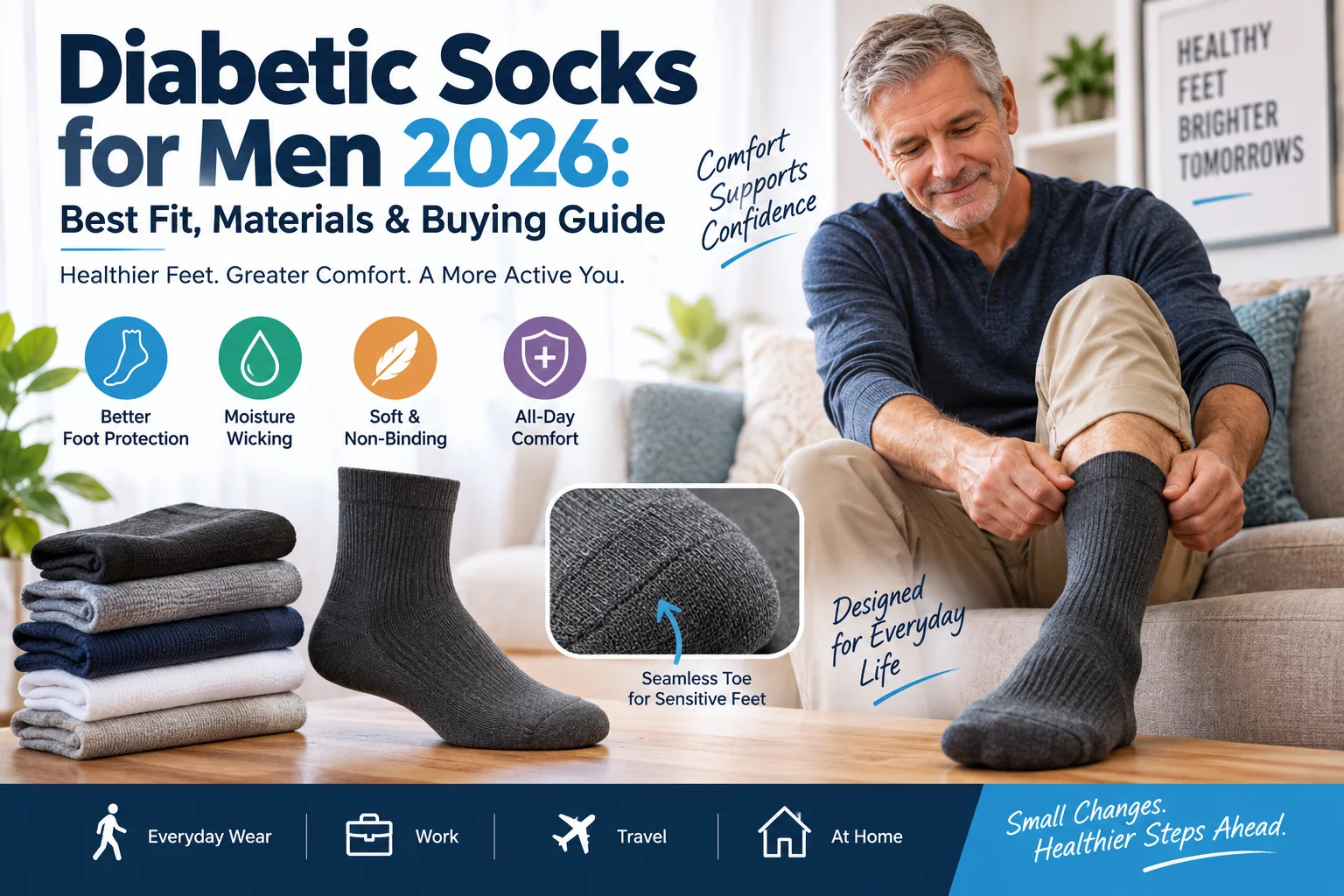
The best diabetic socks for men usually combine a non-binding cuff, smooth toe, appropriate cushioning, moisture management, and enough room without loose folds. They do not treat diabetes, neuropathy, poor circulation, or swelling; they are a comfort and foot-protection choice that should work with well-fitting shoes, daily foot checks, and appropriate medical care.
Quick Answer: What Should Men Look for in Diabetic Socks?
For most men comparing diabetic socks, focus on six things:
- A non-binding cuff that stays up without digging into the leg.
- A smooth or seamless toe to reduce rubbing over sensitive toes.
- A soft interior without rough ridges or bulky construction.
- Moisture-wicking fabric that helps manage sweat and keeps the foot environment drier.
- Cushioning appropriate for the shoe rather than the thickest padding available.
- Correct sizing for shoe size, foot width, and calf circumference.
Men with neuropathy, loss of protective sensation, PAD, wounds, major swelling, or significant foot deformity should involve a podiatrist or other qualified healthcare professional. Current ADA guidance emphasizes daily foot surveillance and at least annual comprehensive foot evaluation, with more frequent assessment for higher-risk feet.
What Makes Men’s Diabetic Socks Different From Regular Socks?
“Diabetic sock” is a product category, not a medical prescription. Designs vary, but the useful features are intended to reduce common sources of friction, pressure, moisture, and constriction.
| Feature | Why it may matter |
|---|---|
| Non-binding or gentle cuff | Reduces the chance of a tight band digging into the calf or ankle |
| Seamless or flat toe | Minimizes a raised ridge over the toes |
| Smooth interior | Helps limit rubbing against sensitive skin |
| Moisture-wicking fabric | Helps move sweat away from the skin |
| Cushioning | Adds comfort and may reduce the feel of impact inside footwear |
| Wide or extra-wide sizing | Creates more room for broad feet, ankles, or calves |
| Proper heel and toe shaping | Helps prevent sliding and bunching |
A regular sock can be acceptable if it fits well, stays dry, has no irritating seam, and does not leave a deep constriction mark. The label matters less than construction and fit. “Loose” is not automatically safer: an oversized sock can fold under the foot, wrinkle in a boot, or slide at the heel.
Do Men With Diabetes Need Diabetic Socks?
Not every man with diabetes needs a special sock. The choice depends on foot sensation, skin condition, swelling, footwear, activity, circulation status, and whether ordinary socks create pressure or irritation.
Diabetic socks may be especially practical for men with sensitive feet, sock marks around the ankle, wide feet or calves, swelling, or difficulty tolerating conventional elastic cuffs. They can also reduce avoidable rubbing when neuropathy is present.
They are not protection against every diabetic foot complication. NIDDK and CDC guidance emphasizes daily foot checks and well-fitting footwear because nerve damage can make cuts, blisters, heat, or pressure injuries harder to notice.
Best Diabetic Socks for Men by Need

There is no single “best” construction for every man. The strongest choice is the pair that solves the actual fit or use problem without creating a new one.
| Product | Key Features | Good Choice For | Style | Amazon |
|---|---|---|---|---|
| Dr. Scholl’s Men’s Diabetes & Circulatory Socks | Non-binding top, soft stretch, moisture-management focused design | Everyday wear | Crew | Check Price on Amazon |
| Pembrook Men’s Diabetic Socks | Loose non-binding top, smooth construction, roomy fit | Everyday comfort and wider calves | Crew | Check Price on Amazon |
| Yomandamor Men’s Bamboo Diabetic Socks | Soft bamboo-derived blend, seamless toe, non-binding top | Men prioritizing softness and low-profile seams | Crew | Check Price on Amazon |
| Orthofeet Men’s Padded Sole Diabetic Socks | Seam-free interior, non-constrictive design, padded sole | Men wanting additional underfoot cushioning | Crew | Check Price on Amazon |
| Debra Weitzner Men’s Non-Binding Diabetic Socks | Loose-fit cuff, stretchable construction, multiple sizes | Wide feet/calves and everyday use | Crew | Check Price on Amazon |
| Doctor’s Choice Men’s Diabetic Socks | Non-binding top, smooth toe area, cushioning and moisture-management features | Work, walking and longer daily wear | Crew | Check Price on Amazon |
For Everyday Wear
A midweight crew sock with a gentle cuff, smooth toe, moderate cushioning, and moisture management is a versatile everyday starting point. It should stay in position without rolling, sliding, or leaving a pronounced groove.
For Neuropathy or Numb Feet
With neuropathy or reduced sensation, inspect construction carefully because discomfort may not warn that something is rubbing. Look for a smooth toe, minimal internal ridges, a soft interior, and no wrinkles.
Cushioning can improve comfort, but a thick sock inside a tight shoe can increase pressure. Diabetic socks do not treat neuropathy or restore sensation; new or worsening numbness, burning, tingling, or loss of sensation should be discussed with a healthcare professional.
For Swollen Feet, Ankles, or Wide Calves
For swollen feet, ankles, or wide calves, look for a stretchier opening and accommodating knit through the ankle and calf. Extra-wide designs may fit better than simply buying a larger shoe-size sock.
A roomy sock can reduce cuff pressure, but it does not treat edema; new, severe, one-sided, painful, or unexplained swelling warrants medical evaluation. For knee-high styles, measure calf circumference as well as shoe size.
For Wide Feet
Men with wide feet need toe room and forefoot stretch without heel slippage. Check the manufacturer’s shoe-size range plus width or circumference guidance.
Do not size up several sizes just for width; excess length can misalign the heel pocket and bunch at the toes.
For Seniors or Men With Limited Dexterity
An easy-stretch cuff can help seniors or men with limited dexterity put socks on without excessive pulling.
Men who cannot safely inspect or reach their feet may need help from a caregiver or foot-care professional; ADA guidance recognizes that visual or physical limitations can make self-surveillance harder.
For Work Boots and Long Days on the Feet
Diabetic work socks should balance cushioning with shoe volume. Heel and forefoot padding may improve comfort, but thick cushioning inside a snug safety shoe can crowd the toes.
In hot work boots, prioritize moisture management and a crew or boot height that stays above the boot collar.
For Dress Shoes
Diabetic dress socks should be thinner and smoother while retaining a gentle top. Avoid heavy cushioning if it makes a fitted dress shoe tight; look for a soft interior and flat toe construction.
For Winter and Cold Feet
Warm diabetic socks may use merino wool or wool blends for insulation and moisture management. Because winter socks can be thicker, recheck shoe fit.
Persistent coldness, color change, pain, or other circulation concerns deserve professional evaluation.
For Summer
For summer, favor breathability, low bulk, and sweat management. Ankle or lightweight crew styles can work if they stay in position and do not expose skin to shoe rubbing.
Which Material Is Best for Men’s Diabetic Socks?
Material is important, but the full fabric blend and construction matter more than one fiber name on the label.
Cotton and Cotton Blends
Cotton feels soft, but pure cotton can hold moisture once saturated. Blends with polyester, nylon, or other fibers may dry faster and retain shape better.
Choose based on fit and sweat management, not cotton percentage alone.
Bamboo-Derived Rayon
Many “bamboo socks” are rayon or viscose derived from bamboo. They can feel soft, but “bamboo” does not make a sock medically superior.
Compare the actual blend, seam, cuff, cushioning, and sizing.
Merino Wool and Wool Blends
Merino wool can be useful in winter because it insulates and manages moisture. Fine merino is typically softer than coarse wool, but thickness still matters; a warm sock that crowds the toes is a poor trade.
Polyester, Nylon, Spandex and Elastane
Synthetic fibers can improve durability, stretch, shape retention, and moisture transport. Spandex or elastane is not automatically a problem; cuff pressure and overall knit matter more than the fiber name.
How Should Diabetic Socks for Men Fit?

The ideal fit is secure but not constrictive. The sock should lie smoothly over the foot, with the heel pocket aligned to the heel, no folds under the sole, and enough toe room for the toes to rest naturally.
Check fit in four places:
- Toes: No fabric bunching and no pressure from the seam.
- Heel: The heel pocket should not ride above or below the actual heel.
- Ankle and calf: The cuff should stay up without creating a deep groove.
- Inside the shoe: The sock should not make the shoe feel suddenly shorter, narrower, or tighter.
A faint temporary sock impression is not the same as a painful, deep, persistent indentation. If a sock feels tight, causes discomfort, changes skin color, produces numbness or tingling, or worsens swelling, take it off and reassess the fit.
With reduced sensation, visual skin inspection becomes particularly important because “it doesn’t hurt” is not a reliable safety test. Neuropathy may reduce a person’s ability to notice pressure or injury.
How to Size Men’s Diabetic Socks
Start with the brand’s own sizing chart rather than assuming all “large” socks fit the same. Men’s shoe size is usually the first measurement, but calf circumference and ankle circumference become more important for crew and knee-high designs, especially with wide calves or swelling.
Measure the calf at its widest point if the manufacturer asks for calf circumference. For the foot, use the shoe-size range and confirm that the heel and toe sections line up correctly after the sock is on.
If you fall between sizes, choose based on the manufacturer’s instructions and your actual measurements rather than automatically sizing up.
Ankle, Crew or Knee-High: Which Length Is Better?
Ankle diabetic socks are cooler and less bulky. They may suit summer wear, walking shoes, or men who dislike fabric on the lower leg.
Crew socks are the most versatile for everyday shoes, work shoes, and casual wear. They offer more coverage while remaining easier to manage than knee-high socks.
Knee-high diabetic socks provide more leg coverage and warmth, but the calf fit matters more. A knee-high non-binding sock is still not the same as a graduated compression sock.
Choose length around footwear, temperature, swelling location, and comfort rather than assuming more coverage is always better.
Diabetic Socks vs. Compression Socks for Men

This is one of the most important buying distinctions.
Traditional diabetic socks are generally designed to reduce constriction and friction. Compression socks intentionally apply pressure to the leg, commonly with graduated compression that is strongest near the ankle and decreases higher up. Compression is measured in mmHg.
Compression can be medically useful in appropriate situations, but it should not be treated as a routine upgrade from diabetic socks. Men with diabetes may also have peripheral artery disease, peripheral neuropathy, wounds, fragile skin, or reduced sensation, all of which can change the risk-benefit calculation.
Current clinical guidance advises extra caution with compression when PAD, significant sensory loss, wounds, severe swelling, or fragile skin are present. A healthcare professional can determine whether compression is appropriate and, if so, what pressure and style should be used.
If your goal is simply a softer cuff and more comfortable everyday sock, choose a non-binding diabetic sock rather than assuming you need 15–20 mmHg or 20–30 mmHg compression.
Do Diabetic Socks Improve Circulation or Swelling?
A non-binding diabetic sock may feel less restrictive than a tight conventional sock, but it should not be advertised as a treatment that “improves circulation.” Its main value is avoiding unnecessary constriction and improving comfort.
Likewise, diabetic socks may accommodate mild swelling better than tight regular socks, but they do not treat the cause of swelling.
Graduated compression is a different therapy that may help certain venous conditions and some forms of swelling, but it requires more careful selection when diabetes, PAD, neuropathy, wounds, or severe swelling are involved.
How Often Should Men Change Diabetic Socks?
Change into a clean, dry pair at least daily. Change sooner if the socks become damp from sweat, wet weather, work conditions, or exercise.
When removing socks, inspect both the fabric and your feet. Moisture, blood, drainage, holes, thinning cushioning, stretched cuffs, or roughened seams are reasons to look more closely and replace worn pairs.
Daily inspection is particularly important when sensation is reduced because foot injuries may not cause noticeable pain.
Can Men Wear Diabetic Socks All Day or Sleep in Them?
Comfort-focused diabetic socks can generally be worn through the day if they fit well, stay dry, and do not create pressure.
For sleep, they are not automatically necessary. NIDDK notes that loose socks may be used in bed for warmth; avoid therapeutic compression overnight unless a healthcare professional has specifically advised it.
What Socks Should Diabetic Men Avoid?
Avoid socks that create a clear fit problem, including:
- Tight elastic bands that dig into the leg.
- Thick, raised toe seams that rub.
- Socks that slide, twist, or wrinkle under the foot.
- Damp socks worn for long periods.
- Socks with holes or rough interior areas.
- A size that makes the toes feel crowded.
- Very bulky socks inside already-snug footwear.
- Compression socks chosen solely because “more pressure must be better.”
Also check the inside of shoes before putting them on. Small stones, damaged insoles, folded liners, or rough edges can create pressure that may be harder to detect when sensation is reduced. The CDC specifically recommends checking shoes for foreign objects and making sure footwear fits properly.
A Practical Buying Checklist
Before buying men’s diabetic socks, ask:
- Does the cuff stay up without digging in?
- Is the toe truly smooth enough for my sensitivity level?
- Does the sock match my foot width and calf size?
- Is the cushioning compatible with my shoes?
- Does the fabric suit my climate and activity?
- Will it manage sweat during work or walking?
- Can I put it on without excessive pulling?
- Does it stay smooth instead of bunching?
- Am I buying a comfort sock or a true compression sock?
- If I have PAD, neuropathy, wounds, or major swelling, have I discussed compression with my clinician?
For online shopping, use manufacturer sizing charts rather than marketplace size labels alone. Compare cuff stretch, toe seam, interior texture, material blend, and return policy.
Pharmacies, medical-supply retailers, footwear stores, diabetes-focused retailers, and major online stores may all carry men’s diabetic socks.
Foot Care Matters More Than the Sock Label
Socks are only one layer of diabetic foot protection. CDC, NIDDK, and the ADA recommend regular foot checks because neuropathy can make an injury less noticeable. Look for cuts, blisters, redness, swelling, skin breakdown, warmth, or other changes and keep footwear clean, smooth inside, and properly fitted.
Seek prompt medical advice for an open sore, ulcer, infection, new unexplained swelling, marked redness or warmth, significant color change, or a foot problem that is not improving.
Current ADA Standards of Care recommend prompt specialist evaluation for open ulceration or unexplained swelling, redness, or increased skin temperature in at-risk diabetic feet.
Frequently Asked Questions
What are the best diabetic socks for men?
The best pair fits smoothly without constricting the leg. Look for a non-binding cuff, smooth or seamless toe, moisture management, suitable cushioning, and the correct width and calf fit.
The “best” construction changes with shoes, climate, swelling, activity, and sensation.
Are seamless socks better for diabetic men?
A seamless or very flat toe can reduce one common source of rubbing, so it may be especially useful for sensitive feet or neuropathy.
However, seam design is only one factor; the whole sock must still fit correctly.
Should diabetic socks for men be tight or loose?
Neither. They should be comfortably secure.
A tight sock can dig into the ankle or calf, while an overly loose sock can wrinkle and bunch. Aim for a smooth fit that stays in place.
Do diabetic socks help neuropathy?
They do not treat diabetic neuropathy or restore nerve function.
Their role is to provide a softer, lower-friction environment and reduce avoidable pressure from seams or tight cuffs.
What are the best diabetic socks for men with swollen feet?
Look for non-binding, extra-wide socks with enough stretch through the ankle and calf.
Do not use a roomy sock as a substitute for evaluating unexplained or significant swelling.
Are cotton diabetic socks good for men?
Cotton can be soft and comfortable, but pure cotton may retain moisture.
Many men may prefer a cotton blend that combines softness with better drying, stretch, and shape retention.
Are bamboo diabetic socks good for men?
Bamboo-derived rayon or viscose socks can feel soft, but the fiber name does not determine overall quality.
Check the cuff, seam, fit, blend, breathability, cushioning, and durability.
Is merino wool good for diabetic feet?
Fine merino wool can work well for warmth and moisture management, especially in winter.
Choose a thickness that leaves enough room inside the shoe and avoid any sock that creates toe pressure.
Can diabetic men wear compression socks?
Some can, depending on the reason for compression and their vascular and neurological status.
Diabetes does not automatically rule compression in or out, but PAD, significant neuropathy, wounds, fragile skin, and severe or unexplained swelling require extra caution. Ask a qualified healthcare professional what compression, if any, is appropriate.
Are diabetic socks worth it for men without neuropathy?
They may be worthwhile if regular socks feel tight, cause rubbing, trap moisture, or do not fit wide feet or calves well.
If ordinary socks already fit comfortably and safely, a special diabetic label may offer little additional value.
How do I know if diabetic socks are too tight?
Warning signs include discomfort, a deep cuff groove, persistent pressure marks, worsening swelling, numbness, tingling, or skin color changes.
If sensation is reduced, inspect the skin rather than relying only on comfort.
Final Takeaway
The best diabetic socks for men are not the pair with the longest list of health claims. They are the pair that fits the foot and calf correctly, reduces avoidable rubbing, manages moisture, works with the intended shoes, and stays comfortable without constriction or bunching.
For everyday wear, start with a non-binding, smooth-toe, moisture-managing sock in the correct size and thickness. For neuropathy, wide feet, swollen feet, work boots, dress shoes, summer, or winter, adjust the construction to the real use case.
And if compression enters the decision, treat that as a separate medical question rather than simply a stronger version of a diabetic sock.
Medical information notice: This article provides general educational and product-selection information and is not a substitute for individualized medical advice. If you have loss of sensation, PAD, wounds, significant or unexplained swelling, infection, or another foot or circulation concern, ask a qualified healthcare professional or podiatrist what sock and compression choices are appropriate for you.
Sources & Medical References
- American Diabetes Association — Standards of Care in Diabetes—2026, Section 12: Retinopathy, Neuropathy, and Foot Care. Current recommendations covering diabetic peripheral neuropathy screening, loss of protective sensation, PAD assessment, daily foot surveillance, comprehensive foot examinations, therapeutic footwear, and referral of high-risk feet.
- National Institute of Diabetes and Digestive and Kidney Diseases — Diabetes & Foot Problems. Guidance on neuropathy, reduced blood flow, daily foot inspection, footwear, socks, skin care, and warning signs.
- Centers for Disease Control and Prevention — Your Feet and Diabetes. Guidance on nerve damage, foot ulcers, daily inspection, shoe fit, foreign-object checks, and comprehensive foot examinations.
- American Diabetes Association — Foot Complications. Guidance on neuropathy, moisture-wicking socks, foot inspection, properly fitting shoes, and diabetic foot complications.
- Cleveland Clinic — What You Need to Know About Compression Socks, July 2026. Current clinical safety discussion covering PAD, severe swelling, wounds, fragile skin, neuropathy, diabetes-related reduced sensation, and warning signs during compression use.
- MedlinePlus — Compression Stockings. General medical information on graduated compression, pressure, fit, and clinical use.

1 thought on “Diabetic Socks for Men 2026: Best Fit, Materials & Buying Guide”