

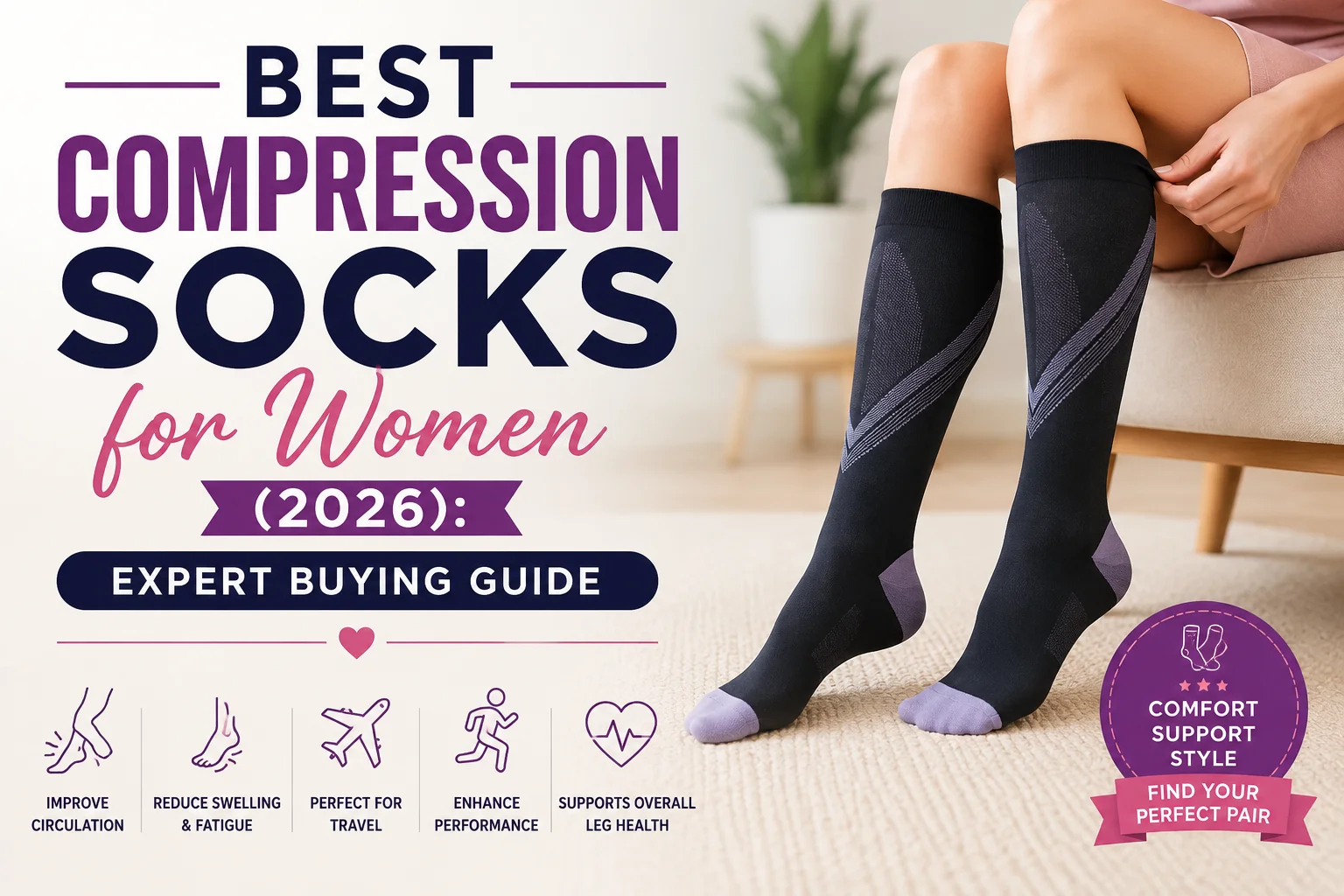
If you have ever kicked off your shoes at 5:00 PM and felt like your calves were filled with lead weights, you are far from alone. Whether you spend eight hours standing on polished hospital floors, sit chained to a desk through back-to-back video calls, or run around after little ones, leg fatigue and ankle swelling can slowly drain your daily energy. For years, I assumed that throbbing ache was just something women had to tolerate as a normal tax on busy modern lives.
Then came a turning point on a cross-country flight, followed by a week of back-to-back 10-hour standing shifts. My feet looked like inflated rubber gloves, and my ankles had vanished into my calves. A friend in healthcare handed me a pair of knee-high compression hosiery and said, “Trust me, just put these on.”
That single decision changed my daily comfort completely.
Finding the right compression socks for women isn’t always straightforward. Walk down any retail aisle or scroll online, and you will find hundreds of choices ranging from paper-thin nylon sheer stockings to thick merino wool athletic socks, with pressure numbers that sound like a high school physics test. How do you pick the right pressure level? What size actually stays up without digging into your knees? How do you put them on without pulling a muscle in your shoulder?
In this comprehensive, real-world guide, we are going to unpack everything you need to know about compression socks for women. We will break down how graduated compression actually works, how to choose the right pressure level (mmHg) for your specific lifestyle, how to take accurate measurements, and how to maintain your socks so they last for years.
How Compression Socks for Women Actually Work
To understand why compression socks for women feel so surprisingly invigorating, it helps to look at basic leg circulation.
Your heart pumps oxygen-rich blood down to your toes through your arteries. Getting that blood back up to your heart is where gravity works against you. Every time you walk, your calf muscles contract and squeeze your deep veins, pushing blood upward against gravity. Tiny one-way valves inside those veins prevent the blood from flowing backward.
       [ Heart ]
          ^
          |   (Blood pumped upward against gravity)
          |
   [ Calf Muscle Pump ]  <-- Squeezed by gentle elastic pressure
          ^
          |
    [ Ankle / Foot ]     <-- Highest pressure applied here (100%)
When you sit or stand motionless for hours, that calf muscle pump sits idle. Blood and lymphatic fluid can settle in the lower legs due to gravity, leading to that familiar heavy, tight, and swollen feeling around your ankles.
The Magic of Graduated Compression
Standard tight tube socks compress your leg uniformly. If a sock squeezes your upper calf just as tightly as your ankle, it creates a tourniquet effect, trapping fluid in your feet.
True compression socks for women use graduated compression. This means the elastic tension is engineered to be strongest at the ankle (where gravity’s force is greatest) and gradually decreases as the sock moves up toward your knee.
By applying maximum pressure around the ankle (100%) and tapering off toward the top band (usually around 70% pressure near the upper calf), graduated compression socks for women gently encourage fluid to travel upward toward your heart.
Key Takeaway: Graduated compression gently narrows the diameter of veins, allowing blood valves to close properly and boosting venous flow back to your torso.
The Benefits of Compression Socks for Women in Real-Life Scenarios

Why do so many women swear by graduated footwear? The benefits go far beyond basic comfort. Depending on what your daily schedule looks like, wearing compression socks for women can address a wide variety of physical demands.
| Product | Best For | Compression Level | Material | Amazon |
|---|---|---|---|---|
| Physix Gear Compression Socks | Daily Wear & Long Standing | 20–30 mmHg | Nylon & Spandex | ➜ Check Price on Amazon |
| FuelMeFoot Compression Socks | Nurses, Teachers & Office Work | 20–30 mmHg | Nylon Blend | ➜ Check Price on Amazon |
| CHARMKING Compression Socks | Travel & Pregnancy | 15–20 mmHg | Nylon & Elastane | ➜ Check Price on Amazon |
| SB SOX Compression Socks | Swollen Legs & Daily Comfort | 20–30 mmHg | Nylon & Spandex | ➜ Check Price on Amazon |
| Copper Compression Socks | Everyday Support & Recovery | 15–20 mmHg | Copper Infused Fabric | ➜ Check Price on Amazon |
+-------------------------------------------------------------------+
|               Key Benefits of Graduated Compression              |
+-------------------------------------------------------------------+
|  1. Reduced Swelling (Edema) around ankles and feet               |
|  2. Relief from dull aching and "heavy leg syndrome"               |
|  3. Prevention of blood pooling during long periods of sitting    |
|  4. Faster muscle recovery after workouts and running             |
|  5. Vascular support during pregnancy                             |
+-------------------------------------------------------------------+
1. For Nurses, Teachers, and Retail Professionals (Standing All Day)
If your job requires standing on hard concrete or linoleum for six to twelve hours, gravity is constantly pulling blood into your lower extremities. Over time, this causes fluid leakage into surrounding tissues, resulting in painful ankle swelling by late afternoon. Wearing quality compression socks for women while on your feet keeps tissue pressure balanced, preventing fluid accumulation before it starts.
2. For Office Workers and Frequent Flyers (Sitting All Day)
Sitting at a desk with your knees bent at 90 degrees slows down blood circulation through your popliteal veins behind the knees. On long-haul flights or road trips, extended immobility increases the risk of deep vein thrombosis (DVT)—a blood clot formed in deep veins. Wearing comfortable compression socks for women during long trips or desk work maintains active micro-circulation, keeping your legs fresh and reducing clot risks.
3. For Pregnancy Support
During pregnancy, a woman’s body produces up to 50% more blood and fluid to support the growing baby. At the same time, elevated progesterone relaxes blood vessel walls, and an expanding uterus places direct pressure on the vena cava (the primary vein returning blood from your lower body). High-quality compression socks for women provide external structural support to stretched veins, mitigating leg fatigue, swollen feet, and varicose vein formation during all three trimesters.
4. For Runners and Athletic Recovery
Athletes rely on compression socks for women to minimize muscle oscillation—the micro-vibrations created every time your heel hits pavement. Reducing this vibration lessens muscle fatigue during runs. Furthermore, wearing compression gear post-workout enhances metabolic waste removal (like lactate buildup) from muscle tissues, speeding up soreness recovery.
Understanding Pressure Levels (mmHg): What Do the Numbers Mean?

Compression strength is measured in millimeters of mercury (mmHg), the standard unit for pressure measurement. When browsing compression socks for women, you will notice a range of two numbers on the label, such as “15-20 mmHg.” The higher number indicates the pressure applied at the ankle, while the lower number represents the pressure near the calf top.
LIGHT             MEDIUM            HIGH              MEDICAL
(8-15 mmHg)       (15-20 mmHg)      (20-30 mmHg)      (30-40 mmHg)
[-----------|-----------------|-----------------|-----------------]
 Everyday          Over-the-counter   Prescription      Severe medical
 comfort, mild     travel, standing,  swelling, varicose conditions only
 aching relief    pregnancy, fatigue  vein support      (doctor's care)
Here is a simple breakdown to help you choose the correct pressure level for your needs:
| Pressure Rating | Level | Common Uses | Who Should Wear It? |
| 8–15 mmHg | Mild / Light | Daily wear, slight fatigue, long sitting | Anyone wanting extra leg comfort during work |
| 15–20 mmHg | Moderate | Mild swelling, long flights, mild varicose veins, pregnancy | The sweet spot for most women. Ideal for travel, nurses, and pregnant moms. |
| 20–30 mmHg | Firm / Medical Grade | Moderate edema, post-surgery, deep vein support | Women managing noticeable swelling or doctor recommendations |
| 30–40 mmHg | Extra Firm | Severe lymphedema, severe varicose veins | Prescription only; requires medical supervision |
How to Choose Your Level
- Starting Out: If you have never worn compression hosiery before, start with 15–20 mmHg compression socks for women. This level offers noticeable support, effectively reduces evening swelling, and remains comfortable throughout a 12-hour day.
- Higher Needs: If you experience severe lower leg swelling by the end of the day or have visible spider veins that throb, consult your physician to see if 20–30 mmHg compression socks for women are appropriate for you.
Choosing the Right Compression Socks for Women: Materials and Fabrics
Not all compression footwear is created equal. The material blend dictates breathability, softness, durability, and moisture control. Selecting the right fabric ensures your legs stay cool in summer and cozy in winter.
Nylon / Spandex Blend ---------> Durable, sleek, fits beneath dress pants
Merino Wool ------------------> Temperature regulating, natural odor resistance
Cotton Blend -----------------> Ultra-soft feel for sensitive skin
Bamboo / Viscose ---------------> Silky, moisture-wicking, hypoallergenic
1. Nylon and Spandex Blends
This is the standard material for most medical-grade and high-performance compression socks for women. Nylon provides durability and structure, while spandex (elastane) gives the fabric its springy elasticity.
- Pros: Highly durable, excellent stretch retention, thin enough to fit inside sleek dress shoes or loafers.
- Cons: Less breathable in high heat if not engineered with mesh ventilation panels.
2. Merino Wool
Don’t let the word “wool” mislead you—merino wool is incredibly soft, itch-free, and temperature-regulating. It naturally wicks moisture away from skin and resists odor buildup.
- Pros: Keeps feet warm in winter and surprisingly cool in summer; perfect for hiking or long cold-weather shifts.
- Cons: Requires gentle washing cycles and takes longer to air dry.
3. Cotton Blends
Cotton-rich compression socks for women offer a natural feel against sensitive skin. They feel like traditional crew socks while providing underlying elastic pressure.
- Pros: Extremely comfortable for casual daily wear at home or around the office.
- Cons: Retains moisture if your feet sweat heavily, which can cause friction or chafing during long workouts.
4. Bamboo Viscose
Bamboo-derived fabric has grown rapidly in popularity due to its silky softness and natural hypoallergenic qualities.
- Pros: Exceptionally soft, eco-friendly feel, great for dry or easily irritated skin.
- Cons: Slightly less elastic rebound compared to technical synthetic blends over dozens of wash cycles.
How to Measure Your Calf and Ankle for a Perfect Fit

One of the biggest mistakes women make when buying compression gear is picking a size based solely on shoe size.
Shoe size only tells you how long your foot is—it says nothing about the width of your ankle or calf muscle. A sock that fits your size 8 foot might dig painfully into your calf or slide down your leg if your measurements don’t match the sock’s elastic proportions.
                  Measurement Point 1: ANKLE
                  Measure around the narrowest point,
                  just above the ankle bone.
                         │
                         ▼
                       ( ( ) )
                        |   |
                        |   |  <--- Measurement Point 2: CALF
                        (   )       Measure around the widest part
                        (   )       of your calf muscle.
                         | |
                         | |   <--- Measurement Point 3: LENGTH
                        /_/_\       Measure from floor to 1 inch
                                    below the bend of your knee.
Step-by-Step Measurement Technique
For the most accurate fit, take your measurements first thing in the morning. This is when your legs have the least amount of accumulated fluid and swelling.
- Measure Ankle Circumference: Wrap a flexible fabric measuring tape around the narrowest part of your ankle, right above your ankle bone. Keep the tape flat against your skin without pulling it tight.
- Measure Calf Circumference: Find the widest part of your calf muscle. Wrap the tape measure around this area to get your calf circumference.
- Measure Calf Length: Sit on a chair with your foot flat on the floor and your knee bent at a 90-degree angle. Measure from the floor up to the fold behind your knee, then subtract one inch. This ensures the top band won’t dig into the back of your knee joint.
Compare these measurements directly to the size chart provided by the sock manufacturer. If your ankle and calf fall into two different size buckets, prioritize the ankle measurement—that is where correct graduated pressure is most crucial.
Master the Technique: How to Put On Compression Socks Easily
If you try to pull on tight compression socks for women the same way you pull on regular cotton socks, you will end up frustrated, sweating, and straining your fingers. Because graduated compression socks are tightly woven around the ankle, they require a specific donning technique.
Here is the quick “Inside-Out Heel Pocket” method that turns a five-minute struggle into a smooth ten-second process:
1.Reach inside and grab the heel:Step 1.
Reach your hand down inside the sock all the way to the bottom and firmly pinch the inside heel pocket.
2.Turn the leg inside out:Step 2.
While holding the heel pocket, pull the leg portion of the sock inside out, leaving only the foot pocket folded inward. You now have a short, easy-to-manage foot sleeve.
3.Slide your foot in:Step 3.
Slip your toes and foot into the sock until your heel sits comfortably inside the heel pocket.
4.Unroll up your calf:Step 4.
Gently grab the turned-out fabric near your ankle and smooth/roll it up over your ankle and calf. Do NOT pull or tug hard from the top band.
5.Smooth out wrinkles:Step 5.
Smooth out any remaining fabric creases with flat hands. Make sure the top band rests about 1 to 2 inches below your knee bend.
Pro Tip: Never fold or roll the top band downward if the sock feels too long. Rolling the top band doubles the elastic pressure in one concentrated strip, creating a uncomfortable band that blocks blood circulation.
How to Avoid Common Mistakes When Wearing Compression Socks for Women
Even high-quality compression socks for women won’t deliver results if worn incorrectly. Avoid these common pitfalls to protect your skin, veins, and comfort.
Common Mistakes to Avoid
─────────────────────────────────────────────────────────────
[❌] Rolling down the top cuff (creates a tourniquet effect)
[❌] Wearing socks with wrinkles or bunched-up fabric
[❌] Sleeping in daytime compression socks (unless prescribed)
[❌] Buying based only on shoe size instead of calf measurements
[❌] Fabric softener use (breaks down spandex elasticity)
1. Sleeping in Compression Socks (Without Doctor Advice)
When you lie flat in bed, gravity no longer pulls blood down toward your feet. Your circulation naturally works horizontally. Wearing firm daytime compression socks for women while lying down can unnecessarily constrict superficial blood vessels. Unless specifically instructed by a doctor after surgery, take your socks off before sleep.
2. Ignoring Wrinkles and Bunched Fabric
A single wrinkle or folded section of fabric acts as a high-pressure crease against your skin. Over several hours, bunched fabric can cut off capillary circulation, causing skin indentation, redness, or skin irritation. Always take a few seconds to smooth out the fabric evenly along your calf.
3. Wearing Damp or Worn-Out Socks
Moisture paired with friction creates the perfect recipe for blisters. Always ensure your legs and socks are completely dry before putting them on. Additionally, elastic fibers naturally lose resilience over time. If your compression socks for women feel noticeably easy to slide on or start slipping down your leg, it is time to replace them.
Caring for Your Compression Socks: Washing and Longevity Tips
High-grade compression socks for women use specialized elastic elastomers that require careful maintenance to keep their structural elasticity intact. Proper care ensures your pairs last six to twelve months of regular wear.
                               WASHING GUIDE
      ┌──────────────────────────────┴──────────────────────────────┐
      ▼                                                             ▼
 [ Hand Wash or Gentle Cycle ]                            [ Air Dry Flat ]
  * Cold water with mild soap                              * Avoid high-heat dryers
  * No bleach or fabric softener                           * Lay flat away from sun
- Wash After Every Wear: Daily wear stretches out elastic fibers and accumulates skin oils, dust, and perspiration. Washing returns the synthetic elastic yarns back to their original compressed state.
- Use Cold Water and Mild Detergent: High temperatures degrade spandex and rubber threading. Wash your compression hosiery in cold or lukewarm water using a mild, bleach-free detergent.
- Avoid Fabric Softeners: Fabric softeners leave a microscopic silicone coating over fabric fibers. This coating clogs breathability pores and destroys the elastic recovery of compression socks for women.
- Air Dry Only: High dryer heat melts fine synthetic fibers, causing socks to lose shape and elasticity. Gently squeeze out excess water with a towel (never wring them aggressively) and lay them flat on a drying rack away from direct sunlight.
Frequently Asked Questions About Compression Socks for Women
Can I wear compression socks for women every single day?
Yes, absolutely. Many nurses, travelers, pregnant women, and office workers wear compression socks for women daily throughout their shifts without issue. Just remember to take them off before bed so your skin can breathe overnight.
How do I know if my compression socks for women are too tight?
Your socks should feel snug and supportive—like a firm, continuous hug along your calf. However, they should never cause sharp pain, numbness, tingling, cold toes, or deep red skin indentations. If your toes turn pale or lose sensation, remove the socks immediately—they are too tight or improperly sized.
What is the difference between men’s and women’s compression socks?
The core mechanism—graduated pressure—is identical regardless of gender. However, compression socks for women are typically designed with slightly narrower heel pockets, shorter calf lengths, and sizing ranges tailored to feminine foot and leg proportions.
Should pregnant women wear compression socks throughout pregnancy?
Many obstetricians recommend mild-to-moderate compression socks for women starting in the first or second trimester. They help support increased blood volume, minimize swollen ankles, and reduce the likelihood of developing pregnancy-related varicose veins. Always consult your healthcare provider to confirm the right pressure level for your pregnancy.
Practical Checklist: Finding Your Perfect Pair
Before ordering your next pair, use this practical mental checklist to ensure you get the right style, fit, and performance for your daily routine:
[ ] Take Ankle & Calf Measurements in the morning
[ ] Select Pressure Level (15-20 mmHg is great for daily wear)
[ ] Pick the Right Fabric (Nylon for work, Wool for outdoor/cold, Bamboo for sensitive skin)
[ ] Verify the Size Chart using calf size (not just shoe size)
[ ] Double-check washing care (plan to air dry)
By matching your daily needs with the proper compression rating and taking accurate leg measurements, you can say goodbye to throbbing lower leg fatigue and enjoy light, comfortable legs all day long.

1 thought on “Best Compression Socks for Women (2026): Expert Buying Guide”